When a quieter cabin and improved audio quality matter, choosing the right car sound deadening mat makes a big difference. These products use butyl, aluminum foil, and multi‑layer constructions to block road, engine, and wind noise while helping regulate interior temperatures. Below, five well‑matched options are highlighted for American drivers seeking DIY installation and solid performance without breaking the bank.
| Product | Brand | Thickness | Coverage |
|---|---|---|---|
| KILMAT 80 mil 36 sqft | KILMAT | 80 mil (2.0 mm) | 36 sqft |
| KILMAT 50 mil 50 sqft | KILMAT | 50 mil (1.3 mm) | 50 sqft |
| CUKWUYBY 80mil 36 sqft | CUKWUYBY | 80 mil (2.0 mm) | 36 sqft |
| Siless 80 mil 36 sqft | Siless | 80 mil (2.0 mm) | 36 sqft |
| VOISNE 197 mil 31 sqft | VOISNE | 197 mil (5.0 mm) | 31 sqft |
These selections emphasize a balance of thickness, coverage, and ease of installation. Thicker mats generally deliver stronger vibration damping and lower noise, but both thickness and total area matter for complete cabin quiet. The listed products provide a range of DIY‑friendly options, with self‑adhesive backs and durable materials designed to withstand automotive environments.
KILMAT 80 Mil 36 Sqft Car Sound Deadening Mat

The KILMAT 80 mil product uses a self‑adhesive butyl and foil construction designed for DIY installation. With a thickness of 80 mil, it offers enhanced insulation performance compared with thinner options. The material is lightweight and engineered to deliver effective sound attenuation and vibration dampening, improving in‑cab acoustics and reducing road noise. The 36 sqft coverage is well suited for doors, trunks, or smaller panels, and the adhesive backing facilitates straightforward placement and adhesion on varied automotive surfaces.
KILMAT 50 Mil 50 Sqft Car Sound Deadening Mat

This option reduces road noise with a 50 mil thickness, offering a balance between ease of installation and effective noise suppression. The self‑adhesive butyl compound and foil layer help to seal panels and dampen vibrations. At 50 sqft, it’s practical for larger sections such as doors or floors, allowing a broader installation footprint without excessive mat waste. The product emphasizes DIY friendliness and consistent performance across common automotive surfaces.
CUKWUYBY 80mil 36 Sqft Car Sound Deadening Mat

The CUKWUYBY mat features an 8‑layer structure including a heat‑reflective aluminum foil and a butyl core. Its 36 sqft coverage targets compartments like doors and trunk areas, offering strong heat reflection and noise reduction. The adhesive backing supports a secure bond, while the material’s durability helps withstand temperature fluctuations and moisture exposure typical in vehicles. This option is positioned for drivers seeking robust, long‑lasting performance with straightforward installation.
Siless 80 Mil 36 Sqft Car Sound Deadening Mat

Siless VIBRO 80 mil stands out for its industrial grade formulation and aggressive damping. The product emphasizes value and performance, designed for applications requiring high noise suppression. The 36 sqft coverage is ample for mid‑sized sections or multiple panels, making it a practical choice for enthusiasts who want substantial attenuation without sourcing numerous smaller sheets. The material’s multi‑layer composition supports effective vibration dampening and sound blocking, contributing to a quieter cabin experience.
VOISNE 197 Mil 31 Sqft Car Sound Deadening Mat
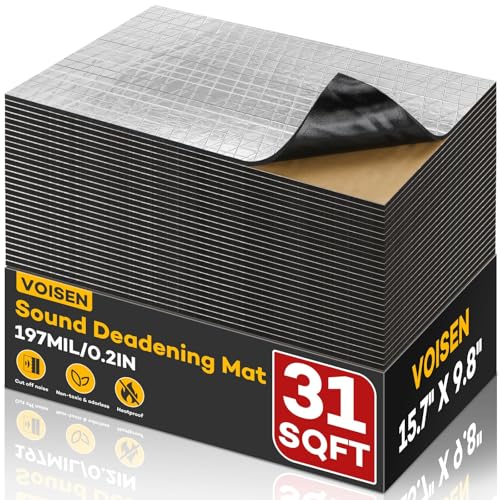
VOISNE offers a notably thick option at 197 mil (5 mm) designed to maximize sound isolation, with a total coverage of 31 sqft. The 28‑piece configuration suggests flexibility for door panels, floors, and trunk areas, with heat and moisture resistance highlighted in its specifications. The triple‑layer design supports strong resistance to road and wind noise while maintaining structural integrity under temperature changes. This product suits users prioritizing top‑tier damping and quieter cabin ambiance.
Zhengmy 53.9 Sqft 196 Mil Car Heat And Sound Mat

Zhengmy’s roll provides a larger area and a high thickness, suitable for extensive coverage such as hoods and floors. The 196 mil (5 mm) material combines heat insulation with vibration dampening, designed to combat engine heat as well as road noise. It’s advertised with a convenient self‑adhesive approach and a broad, long roll that can be cut to fit complex contours. This option targets projects requiring substantial noise reduction and thermal management in a single package.
Buying Guide: Key Considerations When Choosing Car Sound Deadening Mats
When evaluating car sound deadening mats, consider the following factors to ensure you select the best fit for your vehicle and goals:
- Thickness and density: Thicker mats generally provide stronger vibration dampening and better noise reduction, but they add weight. Balance your needs with the vehicle type and installation practicality.
- Material composition: Most options combine butyl rubber cores with aluminum foil or foil‑backed layers. Butyl offers excellent damping, while foil enhances heat reflection and rigidity. Some products add multi‑layer constructions for superior isolation.
- Adhesive quality: A strong, easy‑peel self‑adhesive backing simplifies installation and reduces the risk of gaps. Ensure the adhesive remains effective under temperature changes and humidity.
- Coverage area: Calculate the panels you plan to cover (doors, floors, trunks, roof) and choose a product with sufficient square footage to minimize seams and gaps.
- DIY feasibility: Look for pre‑cut kits or roll formats that suit your skill level. Clear installation guides and online tutorials help ensure a thorough job without compressor tools or special equipment.
- Thermal performance: Some mats emphasize heat reflection in addition to sound dampening. If your aim includes temperature management, select products designed for heat insulation as well as noise reduction.
- Durability and weather resistance: Automotive environments involve moisture, temperature swings, and road debris. Choose mats with robust backing and moisture resistance to maintain performance over time.
In practice, most buyers prioritize a straightforward DIY approach, solid damping for typical street driving, and reliable adhesion. For larger vehicles or more aggressive noise targets, a combination of thicker mats (like 80 mil) and larger coverage (multiple panels) can yield the most noticeable gains. If maximizing quietness is the goal, consider higher thickness with heat‑reflective features and a trusted brand with consistent performance across automotive conditions.
Overall, the products listed provide a diverse set of options for different budgets, installation preferences, and levels of noise reduction. Each choice supports quieter cabins, improved audio experiences, and better interior comfort on American roads.