Reducing road and engine noise can transform a commute or road trip. Vehicle sound dampening mats use butyl, foam, and reflective foils to block and absorb noise, improving cabin acoustics and comfort. Below, five top-rated options cover a range of vehicle types and installation preferences. Each product is evaluated for material thickness, adhesion, coverage, and overall performance to help you pick an effective solution for a quieter car.
| Product | Approx. Coverage | Material Type | Notes |
|---|---|---|---|
| KILMAT 80 mil 36 sqft | 36 sq ft | Butyl + Aluminum Foil | High thickness for strong dampening |
| Amazon Basics Car Sound Deadening Mat (14.5″ x 10″, Pack of 10) | ~10 mats | Butyl Rubber with Aluminum Face | Value pack, easy DIY install |
| Siless 80 mil 36 sqft | 36 sq ft | Butyl + Aluminum Foil | Quality lab-tested damping |
| Siless Liner 157 mil 36 sqft | 36 sq ft | Closed-cell PE Foam | Thermal barrier and vibration dampening |
| AggSound 157 mil 6 sqft | 6 sq ft | Closed-cell Foam | High-density foam with strong adhesive |
The following product sections summarize each option, highlighting key features, installation considerations, and what makes them suitable for different car types and goals. Each section provides practical guidance to help you compare fit, performance, and value.
KILMAT 80 mil 36 sqft Car Sound Deadening Mat

KILMAT 80 mil mats use a thick butyl and foil layer designed for robust vibration reduction. The 80-mil thickness is marketed to yield stronger insulation compared with thinner products, which can translate into quieter road noise and less resonance in the cabin. Self-adhesive backing simplifies installation, making it a practical DIY option for owners who want noticeable improvement without professional installation. A single-square-foot weight of around 0.5 pounds supports handling and ease of cutting to fit irregular shapes. This mat is especially suitable for users seeking high damping performance in a cost-effective, user-friendly package.
Amazon Basics Car Sound Deadening Mat, 14.5″ x 10″, Pack of 10

This 10-piece set uses a butyl rubber substrate with reflective aluminum foil on the front, aiming to reduce vibrations and heat transfer. The durable self-adhesive backing helps secure panels, doors, and floors in place during installation. The aluminum foil layer contributes to thermal insulation, which can also help keep interior temperatures steadier in hot or cold weather. This product is designed for quick, mid-sized projects and is popular for those upgrading a single area or a few panel surfaces rather than a full-car installation.
CUKWUYBY 80mil 36 sqft Car Sound Deadening Mat

The CUKWUYBY 80mil system emphasizes a three-layer structure: an 8-wire reinforced foil for heat reflection, a butyl rubber core for airtight sound blocking, and a strong adhesive backing. It claims substantial noise reduction and is presented as an easy DIY install, with coverage appropriate for doors and trunk areas. With 3-layer design, it targets road, engine, and wind noise simultaneously, aiming to deliver a near-luxury cabin feel at a lower cost. Users should plan cuts and overlaps carefully to ensure consistent coverage and adhesion across curved surfaces.
Siless 80 mil 36 sqft Car Sound Deadening Mat

Siless VIBRO 80 mil mats are positioned as premium damping material for automotive use, combining a high-thickness butyl-based layer with reflective foil. The formulation emphasizes noise reduction efficiency and ease of installation, making it a strong choice for enthusiasts seeking strong performance without excessive thickness. The product’s emphasis on value suggests a balance between cost and performance, with a focus on reducing road and engine noise while maintaining flexibility for various panel shapes. Ideal for owners pursuing a robust noise barrier across larger surface areas.
Siless Liner 157 mil 36 sqft Car Sound Deadening
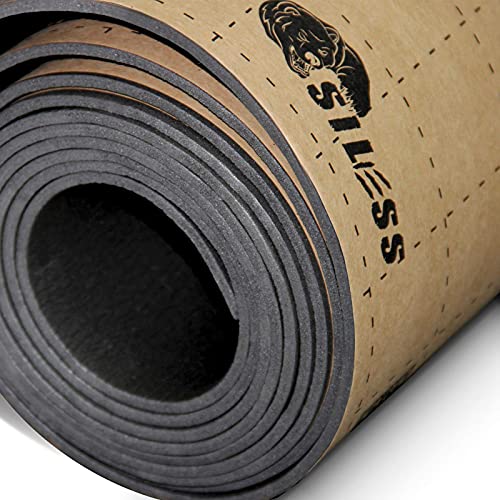
Siless Liner combines closed-cell PE foam with an adhesive layer, delivering a different approach to sound and heat control. The 157 mil thickness indicates a substantial barrier against heat transfer and vibration, while the foam’s water resistance and light weight support flexibility in installation. The liner material is positioned for areas where thermal blocking and moisture resistance are important, such as floors and door panels. It can be particularly effective in hot climates or vehicles that experience higher cabin temperatures, contributing to a cooler ride and reduced audible heat transfer.
Amazon Basics Car Sound Deadening Mat, 9.8″ x 15.7″, 34-Piece

This kit offers 34 pieces of butyl-based dampening material with self-adhesive backing and a reflective foil facing for enhanced thermal insulation. The larger quantity of pieces supports more even coverage across multiple panels, which is useful for mid-sized projects or full interior upgrades. The combination of butyl and foil can help mitigate both vibrations and heat transfer, contributing to a more consistent acoustic profile inside the cabin. It is suitable for car owners who want a straightforward, scalable solution without specialized tools.
AggSound 157 mil Car Sound Deadening Mat

AggSound presents a 4 mm closed-cell foam layer combined with strong backing and adhesive, focusing on superior noise and heat insulation. The 157 mil thickness corresponds to a high-density barrier designed to reduce 98% of heat transfer in some use cases and to dampen a wide range of noise frequencies. The product highlights durability and effective adhesion, making it suitable for owners who value lasting performance in environments with temperature fluctuations or heavy driving conditions. It appeals to those seeking a professional-grade result from a DIY installation.
Buying Guide: Key Purchase Considerations
- Material and thickness: Thicker, multi-layer constructions (butyl with foil, or closed-cell foam) generally provide stronger damping but may require more careful cutting and fitment around irregular surfaces. Consider 80–157 mil depending on climate and noise concerns.
- Adhesion quality: Self-adhesive backing is convenient, but surface preparation is essential for optimal bonding. Clean, dry surfaces and proper pressure during installation improve longevity.
- Coverage and panel targets: Plan the areas to dampen—doors, floors, trunk, and wheel wells. Larger coverage yields more noticeable noise reduction but may increase application time.
- Thermal insulation: Foil-faced products help reflect heat and manage cabin temperatures, which can influence comfort on hot days and affect HVAC efficiency.
- Water resistance and durability: If damp or wet conditions are possible, choose closed-cell foam or waterproof membranes to prevent moisture-related issues.
- DIY vs professional installation: Most products are designed for DIY use, but complex installations (e.g., full-car damping) may benefit from professional guidance or experience with automotive interiors.
- Sound frequency targets: Some dampening solutions excel at blocking mid-to-high-frequency noise (cabin vibrations), while others address low-frequency road noise more effectively. If you frequently drive on highways, prioritize products with robust low-frequency attenuation.
- Cost-to-performance: Pack sizes and coverage influence value. Bundled kits offer cost savings per square foot, while premium products may deliver better long-term durability and faster results.