When a radiator or coolant system springs a leak, choosing a proven sealant can save time, money, and engine damage. The following products are among the most commonly used radiator stop leaks and sealants available on major retailers. This guide highlights five reliable options, explains how they work, and compares their key features to help American drivers make an informed choice for cooling-system reliability.
Product Summary
| Product | Brand | Format | Key Benefit |
|---|---|---|---|
| Liquid Copper Block Seal, 18 oz | Bar’s Leaks | Liquid | Permanent repair with antifreeze compatibility |
| Radiator Stop Leak, 16.9 oz | Bar’s Leaks | Liquid | Seals radiator leaks and freeze plugs; reduces temps |
| Radiator Stop Leak, 11 oz | Bar’s Leaks | Liquid | Seals leaks and protects against future issues |
| Radiator Stop Leak, 250 ml | Liqui Moly | Liquid | Instant seal and protection for all cooling systems |
| Radiator Stop Leak Sealer Conditioner Kit | Visbella | Kit (tube and components) | Stops leaks and lubricates water pump; rust prevention |
Bar’s Leaks 1109 Liquid Copper Block Seal

Bar’s Leaks 1109 is a one-step liquid block seal designed to permanently repair coolant leaks in a wide range of cooling-system components. The formula claims antifreeze compatibility and requires no draining to apply, making it convenient for many vehicles, including cars, trucks, vans, SUVs, and RVs. The liquid glass penetrates gaps in plastic, aluminum, and cast-iron parts, including heads, blocks, intake manifolds, gaskets, freeze plugs, heater cores, and radiators. Fiber additives work with the liquid to form a robust seal. This product emphasizes a simple pour-into-radiator approach for quick effectiveness.
Bar’s Leaks Cooling System Radiator Stop Leak 16.9 oz.
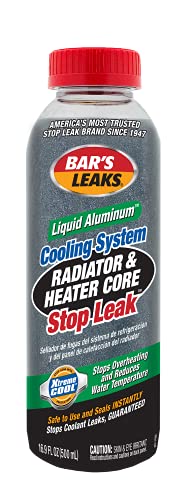
This Bar’s Leaks formula is marketed as a liquid aluminum stop leak that seals radiator leaks and freeze-plug leaks while helping to lower overall cooling temperatures. It’s positioned as capable of repairing leaks in radiators, heater cores, and related components, with an emphasis on preventing future leaks while protecting against rust and corrosion. The packaging notes compatibility with a range of radiator materials, including plastic and metal.
Bar’s Leaks Radiator Stop Leak, 11 oz

The 11-ounce Bar’s Leaks formulation uses a dissolved pelletized method to seal internal and external leaks, as well as coolant-to-oil leaks. It’s described as effective for plastic, aluminum, and metal radiators, heater cores, blocks, heads, gaskets, and freeze plugs, while also lubricating and inhibiting rust. The product targets both current leaks and preventative protection for the cooling system, with a focus on larger leak sealing performance.
Liqui Moly Radiator Stop Leak | 250 ml

Liqui Moly Radiator Stop Leak is formulated to completely seal leaks immediately, protecting the cooling system from coolant-related damage. It is designed for all cooling water and heating systems, including those with water filters, and is suitable for use with or without antifreeze. The product emphasizes rapid sealing and ongoing protection against leaks in a broad range of components within the cooling circuit.
Visbella Radiator Stop Leak Sealer Conditioner Kit

Visbella’s kit combines a stop-leak sealer with conditioning features to protect and lubricate the cooling system. It’s designed for compatibility with all metals, plastics, rubbers, and hoses, and is stated to work across all antifreeze types. In addition to stopping leaks, the product claims to prevent rust and lubricate the water pump, contributing to smoother radiator operation and longer-term reliability.
Bar’s Leaks 1177 Radiator Stop Leak Tablets

Bar’s Leaks Tablets provide a professional-strength formula that seals leaks and protects the cooling system. The tablets are intended to inhibit rust and scale, balance pH, and lubricate as they seal both internal and external leaks, including coolant-to-oil leaks. They are marketed as OEM-used and approved for many vehicles and are recommended for periodic reapplication to maintain protection, approximately every 15,000 miles or once per year.
Buying Guide: Key Purchase Considerations
- Leak type and location: Some products target radiator leaks from gaskets and freeze plugs, while others address heater cores and blocks. Identify the likely source to pick the most effective formula.
- Vehicle compatibility: Ensure the product is compatible with your vehicle’s materials (plastic, aluminum, cast iron) and your antifreeze type. Using an incompatible product can cause unintended corrosion or deposit buildup.
- One-step vs pelletized: One-step liquid seals are convenient for immediate pouring, while pelletized forms may require more precise usage but can be effective for stubborn leaks.
- System integrity: For minor leaks, a stop-leak may suffice, but larger or ongoing leaks could require professional inspection or radiator replacement. Consider reliability goals and safety margins.
- Maintenance impact: Some products offer rust inhibition and water pump lubrication, which can support long-term cooling-system health beyond sealing leaks.
- Safety and drainage: Look for products that do not require draining the cooling system, especially for vehicles that are difficult to access or where a quick fix is preferred.
- Usage guidance: Follow product directions precisely, including dosage, temperature considerations, and driving conditions after application to maximize seal formation.
- Warranty and OEM practice: For larger fleets or work vehicles, consider brands with OEM usage history and documented performance in similar engine configurations.
Choosing a radiator sealant involves balancing ease of use, leak severity, and long-term reliability. The products listed above offer a range of approaches—from simple pour-in solutions to sealed alternatives and conditioning kits. Always consult your vehicle’s owner manual or a professional mechanic if you’re unsure about the proper product for your specific cooling system and driving conditions.