Choosing the right kayak roof rack helps protect your gear and makes every journey smoother. This guide highlights five top options designed to fit most crossbars, offer strong load capacity, and simplify loading and unloading. Each pick includes detailed features to help you compare build quality, durability, and versatility for different vehicles and travel needs.
| Product | Brand |
|---|---|
| PIRIPARA Kayak Roof Rack (2 Pairs) | PIRIPARA |
| FORWODE Premium Kayak Roof Rack (2 Pair) | FORWODE |
| Abahub Soft Roof Rack Pads | Abahub |
| VEVOR Kayak Roof Rack (1 Pair) | VEVOR |
| DOHUSPLE Kayak Roof Rack (2 Pair) | DOHUSPLE |
PIRIPARA Kayak Roof Rack 2 Pairs
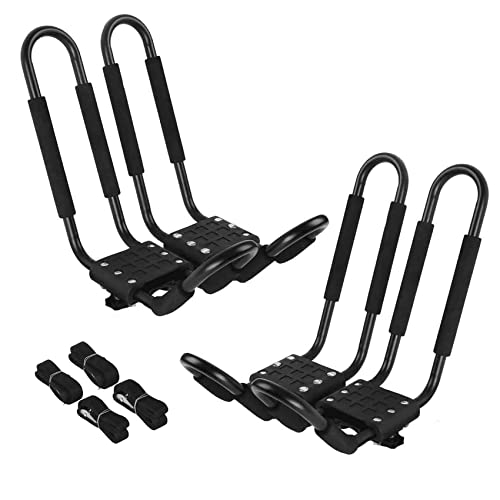
The PIRIPARA system offers durability with a sturdy alloy steel construction and a total load capacity up to 150 lbs. It ships as a set of four J-Bar style racks, designed to hold up to two kayaks and optimize roof space. The heavy-duty framing includes adjustable padding to protect kayaks during transport, while rust-resistant coatings extend product life. The J-Bar design aids loading and unloading by widening the mouth for easier access, helping crews manage gear more efficiently on trips.
FORWODE Premium Kayak Roof Rack

FORWODE emphasizes a thickened carbon steel frame with a 1.2 mm wall and 25 mm diameter tubes to balance strength with lighter weight. The widened design supports two heavy kayaks up to 160 lbs, and corrosion-resistant materials help maintain performance across seasons. A notable folding feature allows the rack to be oriented from zero to 180 degrees for different kayak shapes. The package includes robust accessories, such as belts and straps, with a design that minimizes the need for additional gear during installation and use.
Abahub Soft Roof Rack Pads

Abahub offers a versatile, all-in-one cargo solution featuring soft pads, tie-down straps, and loops designed to protect gear and vehicle paint. The 1680D fabric with reinforced PVC coating provides a soft, non-slip surface to stabilize kayaks, boards, and other equipment. The set includes a complete securing kit with multiple lengths of straps and anchors to secure loads on various vehicles, making it a strong option for multi-gear trips where you need reliable, full-coverage protection.
VEVOR Kayak Roof Rack 1 Pair J-Bar

VEVOR’s rack features a 150 lb load capacity and a foldable, 180-degree adjustable design. It’s designed for quick installation on a range of crossbars, accommodating 1–2 kayaks depending on configuration. The system emphasizes ease of use, allowing users to unfold, load, and fold the rack with minimal tools or effort, making it suitable for frequent travelers who want a balance of stability and speed.
DOHUSPLE Kayak Roof Rack for 2 Kayaks
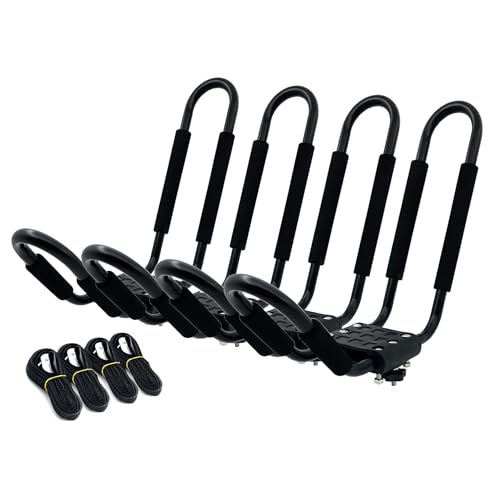
DOHUSPLE offers a set of four racks designed to carry two kayaks with a wide-mouth J-Bar for easy loading. Marketed as compatible with most crossbars (excluding round bars), this option emphasizes a broad carrying capacity and versatile compatibility. The J-Bar design helps secure kayaks on their sides, minimizing load bar space consumption while maintaining strong support for trips that require stable, secure transport of multiple watercrafts.
Buying Guide
Key considerations when selecting a kayak roof rack include compatibility with your vehicle and crossbars, load capacity, and ease of loading. Materials and coatings affect long-term durability, especially for vehicles exposed to road salt, moisture, or frequent travel. Consider whether you need a folding design to maximize roof space after unloading, or a fixed configuration for faster setup. J-Bar versus saddle-style mounts influence loading ease and kayak protection. Always verify fit with your crossbars’ shape (square, rectangular, or oval) and ensure you have the right mounting hardware for your specific vehicle.
- Vehicle compatibility: Check crossbar shape and height; some racks exclude round beams and require square or oval rails.
- Load capacity: Ensure total weight capacity meets the combined weight of kayaks plus gear; oversized vehicles may benefit from higher capacities.
- Material and durability: Stainless steel or coated alloy frames resist rust and wear; consider corrosion protection if you frequent saltwater areas.
- Loading design: J-Bar, saddle, or cradle designs affect ease of loading. J-Bar often offers quicker, simpler handling for single-person use.
- Installation and maintenance: Look for tool-free or minimal-tool setups; ensure included straps and anchors meet your securing needs.
- Storage and space: Folding or adjustable racks can free roof space for other gear or reduce wind resistance when not in use.
For different use cases, compare: two kayaks vs. one kayak plus a paddleboard or canoe; single-vehicle households versus fleets of cars; and short weekend trips versus extended adventures. Durability, ease of use, and reliable securing mechanisms should take priority in selections intended for frequent travel or rugged environments. Always follow manufacturer instructions for installation torque and strap tension to maximize safety on the road.