Choosing a receiver bike rack involves balancing capacity, compatibility, stability, and ease of use. The following five racks are among the most relevant options for American drivers seeking reliable hitch-mounted transport for up to several bikes. Each product below is linked to its Amazon listing for quick access, with a focus on durability, versatility, and secure mounting.
| Product | Max Bikes | Wheel/Weight Range | Key Benefit |
|---|---|---|---|
| MaxxHaul 50025 Hitch Mount 2 Bike Rack | 2 | Standard 1.25″ and 2″ hitch receivers | Broad compatibility with Class I–IV hitches |
| Young Bike Rack Hitch for Car | 2 | 2″ receiver; fits up to 5″ fat tires; 20″–29″ wheels | Tilts for trunk access; padded hooks protect bikes |
| Upgrade 2.0 Hitch Bike Rack | 4 | 2″ receiver; fits wide range of frames | High-capacity, double-arm, anti-sway design |
| MaxxHaul 50027 Platform Bike Rack | 2 | 2″ Class III & IV | Platform style with secure hooks and cradles |
| Swagman XC2 Hitch Mount Bike Rack | 2 | 2″ hitch; adjustable arms | Simple assembly and anti-wobble security |
Note: The table above highlights each rack’s main strengths for typical American vehicles, including SUVs, trucks, and minivans. Details vary by model, so confirm hitch size and bike compatibility before purchasing.
MaxxHaul 50025 Hitch Mount 2 Bike Rack
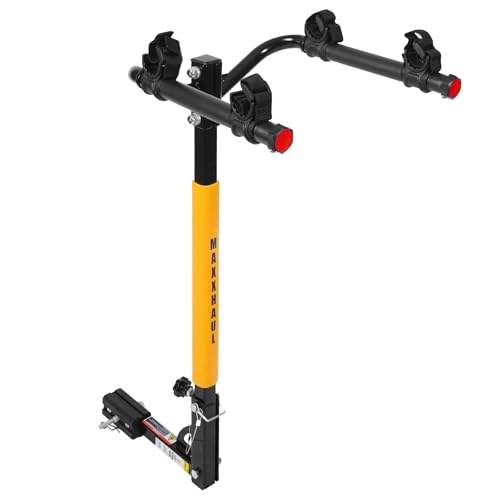
The MaxxHaul 50025 provides broadened compatibility with standard 1-1/4″ and 2″ hitch receivers, covering Class I through IV hitch configurations. Its dual-bike capacity is paired with improved rubber cradles and buckle-type straps to secure each bike, reducing movement during transit. The design emphasizes ease of use for everyday drivers who need reliable transport for two bikes without frequent removal. The rack is built for durability and features a straightforward mounting process, making it a practical option for family road trips or weekend rides.
Young Bike Rack Hitch for Car

This two-bike rack is designed for 2-inch receivers and supports up to 200 pounds total. It offers tilting functionality to access the trunk without removing bikes, and a foldable design for space savings when not in use. Soft padded hooks help avoid frame scratches, while a rear safety reflector improves nighttime visibility. It accommodates a wide range of bikes, including those with fat tires up to 5 inches, and handles wheelbases from 58 inches. This model emphasizes stability, convenience, and versatility for daily drivers and weekend enthusiasts alike.
Upgrade 2.0 Hitch Bike Rack

The Upgrade 2.0 rack stands out with a 240-pound max load and the ability to carry up to four bikes. It uses high-strength steel, with 6 inches of spacing between bikes to prevent contact and damage. The product includes SGS-certified rubber straps for durability and secure holding. Despite its rugged build, the rack remains relatively lightweight at around 24.5 pounds, featuring folding arms for storage. A pin-locking tilt design preserves rear vehicle access without obstructing the trunk, making it suitable for longer trips and varying cargo needs.
MaxxHaul 50027 Platform Bike Rack

This platform-style, two-bike rack fits 2″ Class III and IV hitches and offers adjustable tire cradles with foam-padded hooks. It emphasizes a robust build, enabling a secure hold for bikes with wheel diameters from 20″ to 26″ and wheel widths up to 2-1/4″. The design prioritizes durable construction, broad compatibility, and ease of installation, providing a stable transport solution for SUVs, vans, and larger trucks. The platform format helps distribute weight more evenly, minimizing bike-to-bike contact.
Swagman XC2 Hitch Mount Bike Rack
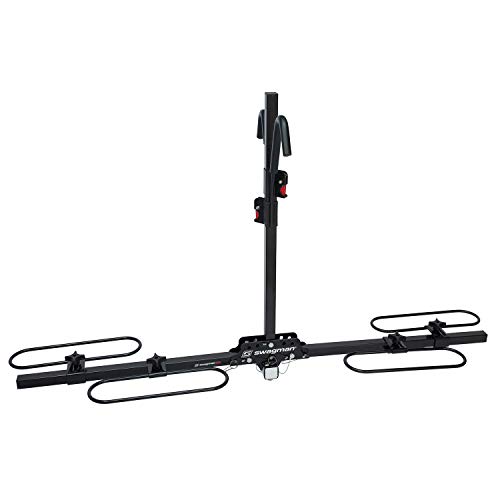
The Swagman XC2 is designed for quick assembly and adjustable arms that accommodate most bike frames up to 59 cm (23.2 inches). A built-in anti-wobble device helps maintain stability even on rough roads. The rack folds for compact storage, making it convenient for vehicles with limited cargo space. The XC2 emphasizes a balanced combination of ease of setup, secure locking, and compact storage, which can be appealing for casual riders and travelers who want a reliable, low-effort option.
Buying Guide: Key Purchase Considerations
When shopping for a receiver bike rack, consider the following factors to tailor your choice to your vehicle and riding needs:
- Offered capacity: Decide how many bikes you typically transport and check the per-bike weight limit. Platforms often handle heavier bikes more evenly, while hanging racks may save space but concentrate weight at the hitch.
- Hitch compatibility: Confirm your vehicle’s hitch class and receiver size (1.25″ vs 2″). Some racks support multiple sizes, which increases versatility across different vehicles.
- Bike compatibility: Look at tire width, wheelbase, frame designs, and whether the rack supports fat tires or step-through frames. Some racks are optimized for mountain bikes, road bikes, or e-bikes.
- Security and anti-wobble: Anti-sway mechanisms reduce movement and potential damage. Rubber straps and padded cradles protect frames from scratches during transit.
- Clean rear access: If you frequently access your trunk, choose a tilting or swivel design that allows rear door access without removing bikes.
- Weight and installation: Lighter racks are easier to handle, but heavier platforms may offer more stability and bike support. Check installation steps and whether tools are needed.
- Storage and transport: Foldable arms and compact storage features are valuable for owners with limited garage space or who travel often.
- Warranty and durability: Consider steel construction, coating, and the availability of replacement parts like straps and cradles for long-term use.
Comparative Perspectives
Platform racks generally provide stable weight distribution and easier bike loading, but can be bulkier. Hanging racks tend to be lighter and more affordable, yet may offer less space between bikes and can be more susceptible to sway. For high-volume use, racks with higher weight ratings and tilt mechanisms help ensure rear access and vehicle practicality. Always verify that your chosen rack aligns with your vehicle’s hitch and your typical bike types to maximize safety and performance.
Overall, the listed options cover a range of budgets and needs—from two-bike daily commutes to higher-capacity family trips. By focusing on hitch compatibility, secure mounting, ease of use, and rear access, you can select a receiver rack that consistently meets American driving and cycling habits.