Oil leaks can threaten engine health and performance. This article reviews five reliable stop-leak products designed to seal seals, rejuvenate gaskets, and reduce oil consumption. Each option is suitable for a range of engines and oil types, helping you choose a practical solution for common leak scenarios.
| Product | Brand | Key Features |
|---|---|---|
| Lucas Oil 10278 Engine Oil Stop Leak – 1 Quart | Lucas Oil | Renews worn seals; compatible with petroleum to full synthetic oils |
| STP High Mileage Oil Treatment + Stop Leak – 15 FL OZ | STP | Seal rejuvenation; anti-wear ZDDP additive; high-mileage protection |
| Bar’s Leaks OS-1 Oil Seal Engine Oil Burning and Leak Repair, 16.9 oz. | Bar’s Leaks | Repairs main seals and gaskets; stops oil burning and blue smoke |
| BlueDevil Oil Stop Leak – 8 Ounce | BlueDevil | Permanent seal; easy to use; works on many engines |
| Lucas Oil 10279 Engine Oil Stop Leak – 1 Gallon | Lucas Oil | Low-solvent formula; reduces noise and oil consumption |
What to know before buying
Stop-leak products vary in viscosity, solvent content, and targeted seals. For high-mileage engines with worn seals, products designed specifically for aging seals can offer longer-lasting restoration. Always verify compatibility with your engine oil type (petroleum, semi-synthetic, or full synthetic) and follow dosing directions to avoid potential sludge buildup or clogging. Consider the vehicle’s age, leak severity, and whether you’re addressing external leaks or internal burning issues.
Product spotlight
Lucas Oil 10278 Engine Oil Stop Leak

The 10278 formulation is designed to work across petroleum, semi-synthetic, and full synthetic motor oils. It renovates worn seals with minimal risk of corrosion and can contribute to lower oil consumption and reduced engine noise. It is a convenient option when looking to extend the life of seals without major engine disassembly.
STP High Mileage Oil Treatment + Stop Leak

Designed for vehicles with over 75,000 miles, this high-viscosity additive includes ZDDP for reduced wear. It helps cushion moving parts, rejuvenates seals, and can reduce leaks, noise, and smoking. It’s intended for use with each oil change and supports cars, light trucks, and SUVs.
Bar’s Leaks OS-1 Oil Seal Engine Oil Repair

This formula targets worn main seals and gaskets, with applications across gasoline and diesel engines, including turbocharged configurations. It supports engines that consume oil at a moderate rate and is suitable for cars, trucks, vans, and SUVs when a straightforward seal reinforcement is needed.
BlueDevil Oil Stop Leak

BlueDevil’s formula emphasizes ease of use and a permanent seal. It is designed to seal leaks by swelling and rejuvenating seals within the oil system. Compatible with most gasoline and diesel engines, this option is favored for straightforward leak sites where a quick fix is needed.
Lucas Oil 10279 Engine Oil Stop Leak
An additional Lucas Oil option, 10279, emphasizes compatibility with various oil types while aiming to reduce oil consumption and noise. It is designed to renew seals and maintain oil pressure, contributing to smoother engine operation without heavy modification.
Lucas Oil 10279 Engine Oil Stop Leak
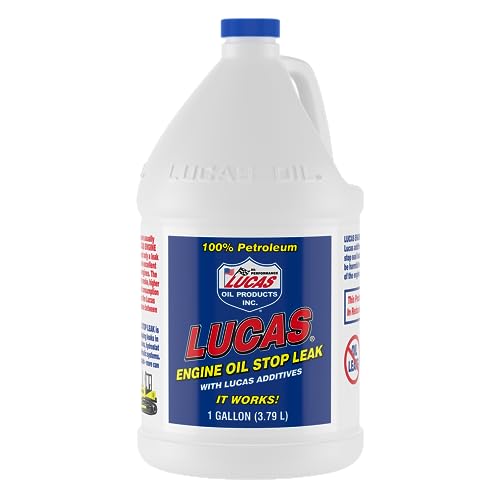
Another Lucas Stop Leak option in gallon form, designed to be suitable for larger vehicle applications or repeated use in older engines. It focuses on compatibility with common oil types and aims to reduce oil consumption while preserving engine performance.
Buying Guide: Key considerations and comparisons
Your choice should align with engine type, oil type, and leak severity. For older engines with worn seals, a high-mileage formula (like STP) may offer extended protection, while a seal-focused product (like Bar’s Leaks OS-1) addresses gasket and valve seal issues. If you’re seeking a simple, user-friendly option, BlueDevil’s stop-leak is designed for easy application and a more permanent seal. Always confirm compatibility with your oil specification and vehicle manufacturer recommendations.
Product concentration and solvent content matter: lower-solvent formulas tend to be gentler on engines but may require longer to achieve results, while higher-solvent variants can react quickly but may carry higher risk of deposits if misused. For severe external leaks, mechanical repair is required; stop-leak additives can coexist with short-term repairs to buy time. Consider vehicle age, mileage, and maintenance history to select the appropriate product profile.
Usage timing is also important. Some products are best added at oil change intervals, while others are suitable for top-off applications when leaks are minor. In all cases, monitor oil level and engine temperature after application and follow-up with a professional inspection if leaks persist or worsen. The right stop-leak product can be part of a proactive maintenance plan to extend engine life and reduce the risk of further damage.
Optional: common signs indicating a stop-leak product may help
- Visible oil spots under the vehicle over time
- Slow drop in engine oil level between changes
- Lower engine noise after initial use of a stop-leak product
- Stable oil pressure and reduced blue smoke in some cases