Seeking a reliable way to run your generator on natural gas? This guide highlights five top-rated natural gas conversion kits and related components designed to expand fuel flexibility, minimize permanent modifications, and preserve gasoline capability. Each option is evaluated for compatibility, installation practicality, and common use cases for American households, farms, and emergency backup power scenarios.
Summary of chosen products
| Product | Brand | Key Benefit | Approximate Fit |
|---|---|---|---|
| Natural Gas Conversion Kit Compatible with Duromax XP12000EH | Generic | Low-pressure NG inlet, retains gasoline operation | Duromax XP12000EH |
| Natural Gas Conversion Kit fits Westinghouse WGEN9500DF | GENERIC | No permanent modification; switch back to gasoline/propane | Westinghouse WGEN9500DF |
| New manual choke Dual fuel carburetor LPG NG kit 4.5-5.5KW GX390 | LEIMO KPARTS | Dual-fuel carburetor for small generators | GX390 and similar class |
| KELKONG GX390 LPG/NG Conversion Kit for Predator/Honda GX | KELKONG | Dual fuel carburetor conversion with safety focus | Predator/Honda GX series |
| YAMAKATO Dual Tri Fuel Carburetor for Predator/Champion etc. | YAMAKATO | Tri-fuel compatibility for multiple brands | Predator, Champion, Generac, Honda clones |
Natural Gas Conversion Kit Compatible with Duromax XP12000EH

This low-pressure natural gas conversion kit is designed to utilize the existing carburetor port for NG intake, allowing operation without permanent engine modification. The kit preserves the ability to run on gasoline and can be reversed to propane by reconnecting the stock propane hose. It targets Duromax XP12000EH owners seeking flexible fuel options and emergency backup capability. Installation emphasizes minimal downtime and straightforward reversion to factory setup.
Natural Gas Conversion Kit fits Westinghouse WGEN9500DF Generator

The Westinghouse-compatible NG conversion kit uses the carburetor inlet port for natural gas, requiring no permanent modifications. It keeps gasoline operation intact and enables a seamless switch back to propane when needed. This option is suitable for users with Westinghouse WGEN9500DF and similar low- to mid-power dual-fuel generators looking to reduce fuel costs or rely on natural gas supply during outages.
New Manual Choke Dual Fuel Carburetor LPG NG Kit 4.5-5.5KW GX390

This dual-fuel carburetor kit is designed for gasoline generators and adds LPG/CNG conversion capability. It targets 4.5-5.5KW output for GX390-class engines (188F). The kit includes a non-asbestos mounting gasket and OEM-style components to facilitate conversion without extensive engine work. It suits homeowners upgrading small portable generators for LPG or NG operation.
KELKONG GX390 LPG/NG Conversion Kit
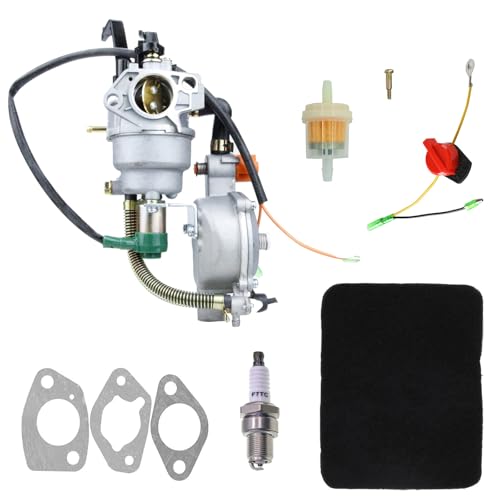
The KELKONG carburetor kit targets Honda GX and GX390-based engines, with a focus on dual-fuel conversion for LPG/NG. It supports a broad range of displacement values (301–420+ cc) and Generac/WH-series compatibility. Its design emphasizes safe operation and reliable carburetor performance during dual-fuel use, including appropriate safety considerations in its construction.
YAMAKATO Tri Dual Fuel Carburetor For Generators

The YAMAKATO tri-fuel carburetor is designed for a wide range of generator brands, including Predator, Champion, Generac, and Honda clones. It supports gasoline, natural gas, and propane/LPG, with an emphasis on OEM-quality replacement parts and non-asbestos mounting gaskets. This kit is suitable for users seeking broad compatibility across multiple generator models and fuel types, providing flexible fueling options for emergency use or off-grid needs.
Buying Guide
Key purchase considerations when selecting a natural gas conversion kit for a generator include compatibility, installation practicality, and the ability to revert to original fuel configurations. Consider the following perspectives:
- Compatibility breadth: Some kits are designed for specific brands or engine displacements, while others claim broader OEM-like support. Verify the exact generator model and engine size before purchasing.
- Modification level: Many kits offer non-permanent modifications that preserve gasoline operation. If you prefer a reversible change, ensure you can reattach original components easily.
- Safety and build quality: Look for robust carburetor construction, proper seals, and materials rated for gas service. Non-asbestos gaskets and CSA-certified fittings are indicators of safety-conscious design.
- Installation effort: Some kits require basic tools and mechanical knowledge, while others may recommend professional installation. Assess your comfort level and warranty implications.
- Fuel availability and supply: Natural gas supply reliability varies by location. In outages, consider how quickly you can switch to gasoline or propane to ensure continuous operation.
- Maintenance implications: Dual-fuel systems may require periodic inspection of gaskets, hoses, and connections to maintain airtightness and prevent leaks.
- Price versus versatility: A higher upfront cost may be justified by wider compatibility across multiple generator models and long-term fuel flexibility.
In practice, choosing a kit often comes down to matching the generator you own (brand and model) with a kit that advertises compatibility for that class of engine. For households using generators as back-up power, a reversible, non-permanent natural gas conversion that preserves gasoline capability tends to offer the best mix of reliability and flexibility.