Choosing the right inline fuel pump is essential for stable EFI performance, especially when upgrading horsepower or changing fuel delivery requirements. This guide highlights five reliable external inline fuel pumps that are designed for 12V EFI systems, with varied flow rates and pressures to suit a range of applications—from stock EFI upgrades to high-performance builds. Each selection emphasizes compatibility, installation simplicity, and durability under demanding conditions.
Overview Of Top Picks
| Product | Brand | Max Flow (LPH) | Operating Pressure (PSI) | Notes |
|---|---|---|---|---|
| EVIL ENERGY External Inline Fuel Pump 300LPH | EVIL ENERGY | 300 | 75 | 60 mm bracket clamp included; 12V EFI fit |
| SPBREW External Inline Fuel Pump 255 LPH | SPBREW | 255 | 115 | Direct-connection design; high-pressure capable |
| JDMSPEED High Flow External Inline Fuel Pump 255 LPH | JDMSPEED | 255 | 15-120 | Includes mounting kit; external inline setup |
| DTMAP Electric Fuel Pump 200 LPH | DTMAP | 200 | 43–75 | Universal 12V EFI compatibility; external inline |
| OSIAS External Inline Fuel Pump EFI 380 LPH | OSIAS | 380 | 75 | AN10 inlet / AN6 outlet; high flow for EFI |
EVIL ENERGY External Inline Fuel Pump 300LPH Black
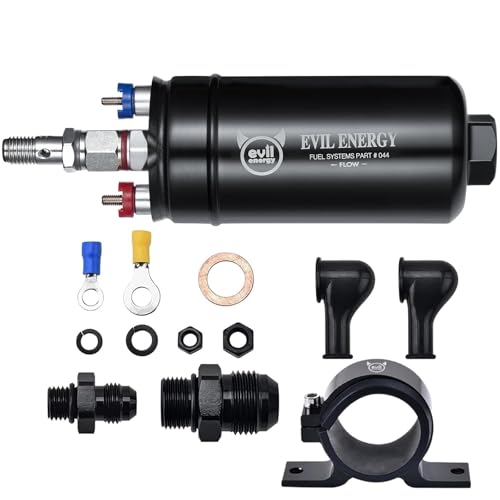
The EVIL ENERGY external inline fuel pump is designed for 12V DC EFI systems. It provides multiple test flow rates: 200 LPH at 75 PSI and 12V, 255 LPH at 43 PSI and 12V, and 300 LPH at 43 PSI and 13.5V. It operates up to 75 PSI and handles temperatures from -68°F to 194°F. Compatible with gasoline, pump gas, race gas, and diesel, this pump suits high-performance EFI configurations while offering robust durability.
SPBREW External Inline Fuel Pump 255 LPH

SPBREW offers a 255 LPH inline fuel pump designed for high-performance applications. It supports high-pressure operation up to 115 PSI and is engineered for consistent fuel delivery under demanding conditions. The design emphasizes a leak-free connection and direct connection to rubber hoses, simplifying installation and reducing the chance of fuel leaks over time. The pump maintains reliable performance across a wide temperature range, suitable for EFI conversions requiring stable flow at varying conditions.
JDMSPEED High Flow External Inline Fuel Pump 255 LPH

JDMSPEED’s 255 LPH inline fuel pump is designed for external mounting and features a complete installation kit for straightforward setup. It operates within a pressure range of 15-120 PSI, allowing users to fine-tune fuel pressure with external regulators as needed. The pump is positioned for applications outside the tank, reducing complexity for certain builds while maintaining reliable fuel delivery for EFI systems across a spectrum of horsepower targets.
DTMAP Electric Fuel Pump 12V 200LPH

DTMAP’s 12V 200 LPH inline fuel pump is designed for high-pressure EFI systems, with an operating range of 43–75 PSI. It fits a broad range of 12V fuel pump applications and supports external inline installation. This pump is marketed for EFI systems and emphasizes compatibility with modern electronic fuel injection designs, while clearly indicating it is not suitable for carburetor-style setups or low-pressure requirements.
OSIAS External Inline Fuel Pump EFI 380LPH

OSIAS delivers a high-flow external inline pump rated at 380 LPH, designed for 12V DC EFI systems. It features an AN10 inlet and AN6 outlet, with a 60 mm mounting bracket clamp for secure installation. The pump is compatible with multiple fuel types including gasoline, pump gas, race gas, diesel, and fuels with ethanol blends. Its 75 PSI operating pressure supports high-demand EFI applications, making it suitable for performance builds requiring strong fuel delivery.
Buying Guide: Key Considerations For Inline EFI Pumps
- Flow rate vs. fuel pressure: Higher flow rates help with horsepower gains, but must be matched with appropriate fuel pressure to avoid cavitation. Check your ECU’s requirements and any fuel pressure regulator in your system.
- Voltage and current draw: Most EFI inline pumps operate at 12V. Ensure your electrical system can provide sufficient amperage without causing voltage drops that could affect performance.
- Fuel type compatibility: Some pumps are rated for gasoline only, while others handle ethanol blends (E85) or diesel. Confirm compatibility with your fuel mix to maximize pump life and reliability.
- Mounting location: External inline pumps are typically mounted outside the fuel tank. Consider ease of access for maintenance, vibration dampening, and heat exposure.
- Installation accessories: Many pumps ship with mounting brackets, clamps, and fittings. A kit that includes hoses and fasteners can simplify installation, but verify that fittings match your plumbing (AN, barb, or hose sizes).
- Durability and warranty: Look for pumps engineered for continuous operation under high temperatures and vibration. A solid warranty can reduce risk in upgraded EFI builds.
- Regulatory and vehicle-specific considerations: Some pumps are optimized for high-performance engines or require regulators and return lines. Ensure compatibility with your vehicle’s fuel system architecture and local regulations.
Inline EFI pumps offer a compact, efficient solution for delivering consistent fuel pressure and volume across modern injectors. When selecting a pump, align the specifications with your EFI system’s needs, monitor fuel temperature during operation, and plan for proper wiring and grounding to minimize electrical noise and performance dips. The listed options provide a range of flows and pressures to support both standard and enthusiast-grade builds.