Engine treatment oils and additives help reduce friction, protect seals, and extend engine life. This article highlights select options designed for different needs—from high-mileage vehicles to fuel economy improvements. Each product emphasizes wear protection, sludge control, and smoother operation. Read on to compare five trusted engine treatment oils that can be added with your regular oil change. Note that prices are not included, and results may vary by vehicle and operating conditions.
| Product | Brand | Key Benefit |
|---|---|---|
| STP High Mileage Oil Treatment + Stop Leak | STP | Seal rejuvenation and anti-wear protection for high-mileage engines |
| Prolube Oil Treatment | Prolube | Reduces wear, noise, and vibration; boosts efficiency |
| Liqui Moly MoS2 Anti-Friction Engine Treatment | Liqui Moly | MoS2-based film for high-load friction reduction |
| Rislone 4102 XTREME LUBE Maximum Performance | Rislone | Sludge removal and broad-temperature protection |
| Lucas Oil 10001 Heavy Duty Oil Stabilizer | Lucas Oil | General stabilizer for improved lubrication |
STP High Mileage Oil Treatment + Stop Leak

STP High Mileage Oil Treatment is designed for vehicles with 75,000 miles or more. The product combines a high-viscosity oil additive with a ZDDP anti-wear agent, creating a protective cushion between moving engine components to reduce metal-to-metal friction. In addition, the stop-leak formulation helps rejuvenate seals and gaskets to curb leaks, reducing engine noise and smoking while improving performance. It is intended for use with standard engine oil during regular changes, and is suitable for cars, light trucks, and SUVs. The additive aims to extend oil life and maintain lubrication under various operating conditions.
Prolube Oil Treatment
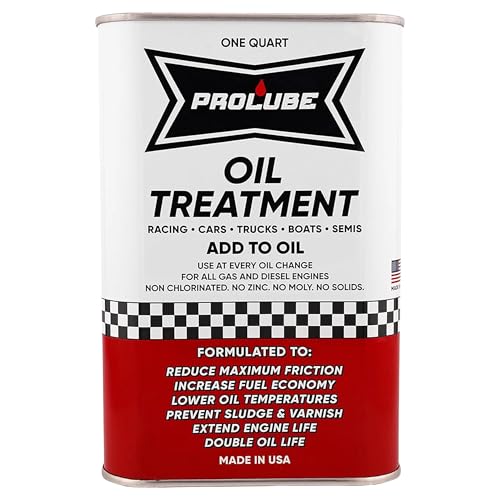
Prolube Oil Treatment is marketed as an engine oil additive for both gasoline and diesel engines. The product focuses on increasing horsepower and reducing engine noise and vibrations, leading to a quieter and smoother drive. Its formulation targets friction reduction, which can help improve daily driving efficiency and overall engine performance. Additionally, it claims to aid in preventing overheating by maintaining more consistent lubrication, potentially extending engine life when used with regular maintenance.
Liqui Moly MoS2 Anti-Friction Engine Treatment

Liqui Moly MoS2 Anti-Friction Engine Treatment uses a molybdenum disulfide (MoS2) additive to form a high-load film on friction surfaces. The product is designed to reduce wear, lower friction, and improve engine smoothness at high RPMs. It is marketed as universally compatible with various engines and oils, and it claims noticeable improvements in engine sound and control during operation. This option is suited for drivers seeking targeted friction reduction across a wide range of driving conditions.
Rislone 4102 XTREME LUBE Maximum Performance

Rislone XTREME LUBE Maximum Performance is designed to reduce friction and wear with a multi-grade formula that maintains oil flow across a broad temperature range. It also targets sludge formation by cleaning and keeping deposits in suspension, helping to prevent blockages and improve tolerances. The product claims to quiet noisy lifters by penetrating bearing surfaces and removing sludge and varnish that can accumulate over time, which may benefit engines operating in challenging conditions or older vehicles.
Lucas Oil 10001 Heavy Duty Oil Stabilizer

Lucas Oil 10001 Heavy Duty Oil Stabilizer is positioned as a universal oil additive that can help stabilize lubrication, particularly in high-mileage or stressed engines. The formulation emphasizes improving lubricating film strength and reducing oil consumption under varied driving conditions. It is marketed as compatible with new or older engines, aiming to improve overall engine reliability by enhancing lubricant performance and protecting critical components from wear.
Buying Guide: Key Considerations For Engine Treatment Oils
- Engine type and mileage: High-mileage engines may benefit from seal conditioners and anti-wear agents, while newer engines may prioritize friction reduction for efficiency.
- Oil compatibility: Check whether the additive is compatible with conventional, synthetic, or synthetic-blend oils and with the engine’s specifications.
- Friction reduction vs. seal protection: Some products emphasize anti-wear and seal rejuvenation, while others focus on friction-reducing films. Choose based on symptoms like rough idle, ticking, or oil leaks.
- Load and operating conditions: High-load or high-temperature engines (toully used for towing, heavy-duty use) may benefit from MoS2 or similar high-film-strength technologies.
- Maintenance integration: Additives are typically used with each oil change. Confirm usage guidelines to avoid over-concentration or conflicting formulations.
- Diagnostics and expectations: Engine noises, sludge buildup, or fuel economy improvements can vary. Use additives as part of a broader maintenance plan including regular oil changes and filter replacement.
- Safety and emissions: Ensure the chosen product complies with local emissions requirements and does not compromise engine sensors or seals.
In choosing an engine treatment oil, consider the vehicle’s age, driving style, and maintenance history. Assess whether you need seal conditioning, sludge control, or enhanced lubrication, and select a product whose advertised benefits align with your engine’s needs. Always follow label directions and consult the vehicle’s owner manual or a qualified technician if you’re unsure about compatibility with your oil type.