Owners of engines that emit blue or white exhaust often search for reliable additives to reduce smoke and restore compression. This article highlights five trusted products designed to curb oil burning, seal worn components, and improve overall engine performance. Each option is evaluated for effectiveness, compatibility, and typical usage scenarios, helping you compare solutions without guessing.
| Product | Brand | Key Benefit |
|---|---|---|
| Liqui Moly Oil Smoke Stop | Liqui Moly | Reduces blue smoke, seals wear gaps |
| NoSmoke + StopLeak | Bardahl | Stops burning oil, seals leaks, reduces emissions |
| Stop Smoke & Engine Repair | BlueDevil | Exhaust smoke reduction, restores compression |
| Bar’s Leaks 1000 | Bar’s Leaks | Stops oil leaks, reduces smoke, improves compression |
| Wynn’s Stop Smoke | Wynn’s | Reduces smoke, improves viscosity behavior |
Liqui Moly Oil Smoke Stop 300 ml

Liqui Moly’s Oil Smoke Stop is a high-viscosity additive designed to seal gaps created by wear in internal engine parts. It’s formulated to work with typical petrol and diesel engine oils, and specifically targets blue smoke from burning oil. The product aims to minimize smoke while helping to maintain proper lubrication in worn areas. Suitable for engines showing blue exhaust, this additive can help reduce oil loss and emissions by sealing gaps that develop over time. It is compatible with a wide range of engine oils commonly used in modern vehicles.
Bardahl NoSmoke + StopLeak

Bardahl NoSmoke + StopLeak combines burn-reduction with sealant action. The formula claims to reduce oil burning by filling loose tolerances, effectively limiting oil consumption and excessive exhaust smoke. It also acts as an engine oil leak sealer to quiet noisy lifters and restore some reliability to seals. Additionally, this additive is positioned to help emissions stay within acceptable ranges by limiting oil burning as seals begin to wear. It’s a practical option for aging engines with oil-burning tendencies and minor leaks.
BlueDevil Stop Smoke & Engine Repair

BlueDevil Stop Smoke & Engine Repair is designed to reduce exhaust smoke while driving, and it claims to restore engine compression. The product emphasizes maintaining performance by conditioning gaskets and seals as you operate the engine, which can help improve efficiency and reduce oil loss. It’s marketed as a solution that works in real-world driving conditions, opening the possibility of reduction in smoke without requiring immediate mechanical repairs. This makes it appealing for drivers seeking a proactive, ongoing treatment rather than a one-off fix.
Bar’s Leaks 1000 High Mileage Engine Repair
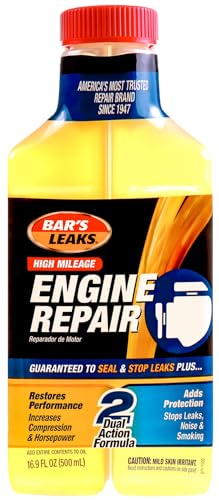
Bar’s Leaks 1000 is a high-mileage engine repair formula designed to restore compression and reduce smoking. It claims to increase compression and horsepower by addressing worn cylinders, rings, bearings, and seals. In addition to stopping leaks, the product targets reduced oil consumption and quieter operation. It is positioned for engines with extended service histories that exhibit oil burning and smoke, offering a solution that can improve performance while addressing common blow-by issues.
Engine Oil Stop Leak Engine Stop Smoke

MotorPower Care’s Engine Oil Stop Leak offers a formula aimed at stopping oil leaks and sealing gaskets while preventing oil burning and excessive exhaust smoke. This product presents itself as a straightforward option for engines that are experiencing both leaks and smoke. It emphasizes safe usage and compatibility across common engine types, making it a practical choice for owners looking to address multiple issues with a single additive.
Buying Guide
- Severity of smoke: Distinguish between minor blue smoke from wear and persistent oil burning. Choose a solution aligned with smoke intensity and engine age.
- Engine type and oil system: Verify compatibility with petrol, diesel, turbocharged, and high-mileage engines. Consider whether seals and gaskets are in need of restoration or simple sealing.
- Compression impact: Some products claim to restore compression or reduce leaks; evaluate whether compression improvement aligns with your performance goals.
- Emissions and legality: For drivers near emission standards, pick additives that can help reduce pollutants from exhaust while maintaining compliance with local regulations.
- Maintenance approach: Decide whether you want a temporary reduction in smoke or a long-term repair-oriented solution that targets leaks, seals, and combustion efficiency.
- Usage instructions: Follow dosage guidelines and any engine-warm-up requirements. Overuse can affect oil viscosity and engine performance.
- OEM recommendations: Always check the vehicle manufacturer’s guidelines for oil additives to avoid warranty concerns.
- Driving conditions: Consider whether you drive long highway trips or short city runs, as this can influence how quickly an additive takes effect.
- Side effects and compatibility: Some formulas may alter oil viscosity or interact with certain oils; read ingredients and compatibility notes carefully.
- Cost vs. benefit: Weigh the potential smoke reduction against the long-term costs of additives and any follow-up maintenance that might be required.
Choosing the right stop-leak or smoke-reduction additive depends on engine condition, usage patterns, and how aggressively the smoke is emitted. The products listed above provide various approaches—from sealing worn gaps and reducing oil burning to restoring compression—allowing you to select a solution that best fits your vehicle’s needs and your maintenance plan.