The right engine degreaser can transform under-hood grime and heavy buildup into a showroom-clean finish without harming sensitive components. This guide reviews five highly effective options, highlighting how each performs on engines, undercarriages, and shop equipment when paired with a pressure washer. Read on to compare strengths, surface compatibility, and application tips to maximize your cleaning results.
| Product | Brand | Size | Key Benefit |
|---|---|---|---|
| Chemical Guys Signature Series Orange Degreaser | Chemical Guys | 16 oz | Powerful, fast-acting degreasing for engines and metal surfaces |
| WD-40 Specialist Degreaser | WD-40 | 15 oz | Heavy-duty, fast-acting degreasing with multi-surface use |
| Kraken BOND Engine Cleaner Spray | KRACKEN BOND | 2 x 12.3 oz | Strong cleaner for tough under-hood grime |
| Radiator Specialty Gunk FEB1 Engine Brite Foam | Gunk | 18 oz | Foam degreaser designed for engines |
| ADORBO Engine Cleaning Gun Solvent | ADORBO | As sold | High-pressure spray for targeted degreasing |
Chemical Guys Signature Orange Degreaser — 16 oz

This professional-strength degreaser is designed to dissolve grease, oil, and grime quickly on engines, tires, undercarriages, and tools. The orange formula is versatile across engine bays, wheels, and shop equipment, making it suitable for spray-on applications via pressure washer or manual scrubbing. Safe for use on cars, trucks, SUVs, and motorcycles when directions are followed. Ideal for tackling heavy road grime and baked-on oil in busy workshop environments.
Chemical Guys Signature Orange Degreaser — 128 oz

The larger 128-ounce bottle provides extended cleaning capacity for larger engines or commercial tasks. Like the 16-ounce version, this degreaser delivers rapid grease, oil, and grime removal with a versatile approach for engine bays, undercarriages, wheels, and shop equipment. It’s a preferred choice for frequent cleaning cycles and professional detail tasks where throughput matters, especially when paired with high-pressure rinsing.
WD-40 Specialist Degreaser — 15 oz

This heavy-duty degreaser is designed to break down tough grease on engines and heavy machinery, with fast-acting action that cleans on contact. It’s also versatile for metal tools and power equipment, offering a protective layer to help prevent rust after cleaning. The product is suitable for use in pressure-washing workflows, provided instructions are followed for safe dilution and application on sensitive components.
Radiator Specialty Gunk FEB1 Engine Brite Foam Degreaser

Engine Brite Foam Degreaser provides a foaming action that clings to vertical surfaces, aiding in solvent-based penetration of grease and oil. The foam helps extend contact time without excessive runoff, allowing for thorough degreasing of engine bays and related components when used with a pressure washer or hand-scrubbing method. It is a well-known option for consistent, inside-out cleaning in automotive shops.
KRACKEN BOND Engine Cleaner Spray — 2 Pack
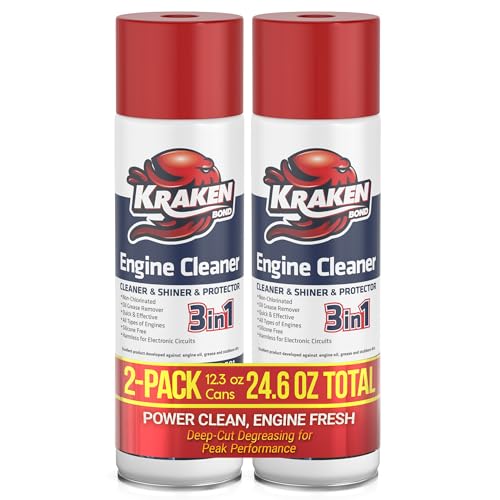
Kraken BOND Engine Cleaner is designed for removing burned oil and stubborn grime around valve covers and engine tops. The spray format enables targeted application without oversaturation, making it useful for spot-degreasing before a more comprehensive pressure-washer pass. The product is promoted as a strong cleaner ideal for maintaining under-hood cleanliness in challenging grime scenarios.
YGDMD Air Engine Cleaning Gun With Hose

This pneumatic cleaning gun supports siphon spraying with water or cleaners to target hard-to-reach engine areas. It’s designed for narrow spaces and precise application, complementing degreasing products by enabling controlled pre-wash or post-wash detailing. The tool includes a long nozzle and adjustable pressure, aiding efficient deep-clean sessions in compact engine bays.
Buying Guide: Engine Degreasers For Pressure Washing
- Surface compatibility: Check that the degreaser is safe for metal, painted surfaces, aluminum, and rubber seals found in engines. Some formulations target metal grime more aggressively, while others are gentler on coatings.
- Concentration and dilution: Many products offer concentrated formulas that require dilution with water. Follow manufacturer guidelines to avoid damage to engine components or wiring insulation.
- Foam vs. spray performance: Foaming degreasers cling to vertical surfaces longer, helping with contact time. Spray formulations can be ideal for quick spot-cleaning and pre-wash prep before pressure washing.
- Environmental and surface restrictions: For garage floors and drainage, choose products that minimize runoff and are compatible with your waste-water disposal practices.
- Application method: Some degreasers are designed for spray applications, while others are best used with brushes or rags. Pressure washer compatibility should be confirmed on the product label.
- Rinsing requirements: Effective rinsing is crucial to prevent residue that could attract more dirt or affect sensor areas. Look for products that rinse cleanly without leaving sticky residues.
- Tool compatibility: For stubborn grime, pairing degreasers with an engine cleaning gun or spray wand can improve precision and reduce solvent usage.
- Safety: Use gloves and eye protection. Ensure good ventilation when applying solvents and avoid contact with electrical connections or exposed wiring.
Engine degreasers for pressure washers vary in strength, delivery method, and surface compatibility. When selecting a product, consider the level of grime, the engine type, and how you intend to rinse and dry the area. For best results, test on a small area first and follow all safety guidelines from the manufacturer.