When cooling system leaks threaten engine performance, choosing a reliable cylinder head stop leak can save time and money. This article reviews top-rated stop-leak products designed to seal head gasket, intake, and block leaks without extensive dismantling. Each option below is evaluated for compatibility with common antifreeze formulations, ease of use, and potential long-term effectiveness. For quick reference, a summary of the featured products is provided in the table here.
| Product | Brand | Key Benefit |
|---|---|---|
| HG-1 Head Seal | Bar’s Leaks | Fast coolant-related gasket repair |
| Block Seal Head Gasket Fix | Bar’s Leaks | Seals head gaskets, blocks, and cracks |
| 1100 Head Gasket Repair | Bar’s Leaks | Stops leaks in heads and blocks |
| 1109 Liquid Copper Block Seal | Bar’s Leaks | Permanent sealing for multiple cooling-system leaks |
| Steel Seal Blown Head Gasket Fix | STEEL SEAL | DIY head gasket fix with triple-patented formula |
Bar’s Leaks HG-1 Head Seal Blown Head Gasket Repair

Bar’s Leaks HG-1 Head Seal is designed to address blown head gasket leaks by sealing coolant-related gasket failures. The formula is described as antifreeze-compatible and requires no flushing of the cooling system. It is suitable for engines that can idle for about 15 minutes without overheating and can tolerate a 50-50 coolant mix, including various silicate and non-silicate based antifreezes. This product aims to seal warped or cracked heads and blocks when used as directed, with no need for thermostat removal.
Bar’s Leaks Block Seal Head Gasket Fix
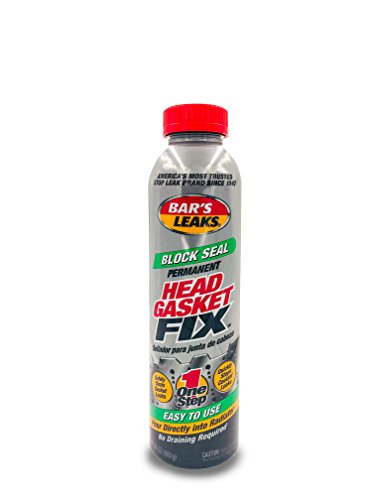
This one-step formula uses a combination of sodium silicate sealing liquid and gasket sealing particles to penetrate gaps and cracks in the cooling system. It is designed to seal head gaskets, cylinder heads, blocks, intake gaskets, and even cracked blocks or freeze plugs. The product claims a quick, permanent stop to coolant leaks by leveraging high-temperature sealing chemistry. It requires no draining, and it can be added while the engine idles for about 20 minutes without overheating.
Bar’s Leaks 1100 Head Gasket Repair – 20 oz.
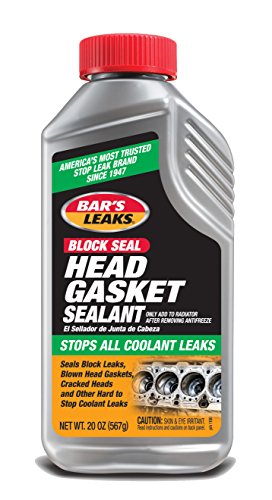
Bar’s Leaks 1100 Head Gasket Repair offers a one-step formula designed to seal leaks in cylinder heads and blocks while reforming gaskets. It’s promoted as effective for both blown head gasket problems and other coolant leaks. The product emphasizes compatibility with typical cooling systems and antifreeze types, with the expectation that the engine can idle for 20 minutes without overheating or coolant loss. This option is positioned as a direct head gasket repair in a bottle without extensive disassembly.
Bar’s Leaks 1109 Liquid Copper Block Seal

The 1109 Liquid Copper Block Seal uses a sodium silicate liquid glass to seal leaks across multiple cooling-system components, including the heads and intake. The product is designed to be antifreeze-compatible and requires no draining. It is intended to permanently seal larger and smaller leaks by forming a durable bond inside the cooling circuit, facilitating a straightforward pour-into-radiator process that complements existing coolant services.
Steel Seal Blown Head Gasket Fix Repair Sealer
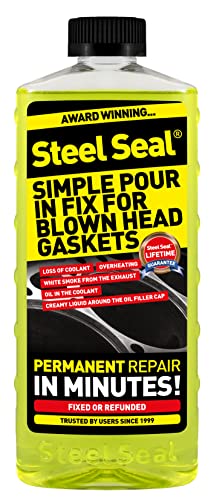
Steel Seal presents a triple-patented formula for a do-it-yourself head gasket fix. Marketed as permanently sealing head gasket leaks in 4-cylinder engines, the product positions itself as a robust, fast-curing sealant that works without extensive engine disassembly. It emphasizes a user-friendly pour-in application designed for straightforward use in engines with head gasket failures or minor cracks.
Buying Guide: Key Purchase Considerations
Choosing the right cylinder head stop leak requires weighing material compatibility, application scope, and potential risks. Consider the following perspectives to determine the best option for your engine and maintenance plan:
- Scope of leaks: Some formulas target head gaskets and blocks, while others address broader coolant system leaks including intake manifolds and freeze plugs. Identify whether the leak is localized to the head gasket or involves other seals.
- Engine compatibility: Check antifreeze compatibility and whether the product supports the coolant type used in your vehicle (silicate-based, HOAT, OAT, etc.).
- Heat tolerance: High-temperature exposure within the combustion chamber is a factor in some formulations. Consider whether your engine can idle for the recommended duration without overheating when applying the product.
- System integrity: For engines with aluminum components, ensure the sealant can safely seal aluminum and cast iron parts without causing galvanic corrosion or blockage.
- Ease of removal or future service: Some products claim permanent sealing, which can complicate future mechanical work. If ongoing maintenance or gasket service is anticipated, balance permanence with serviceability.
- Application process: Look for products that require no draining or minimal system modification. If a drain is unavoidable, plan for a proper coolant disposal and refill.
- Warranty and evidence: Review product claims, supporting use cases, and any manufacturer guidance on engine types and leak severities.
For most users, start with a product that specifically targets head gasket or gasket-related leaks, employs antifreeze-compatible chemistry, and requires minimal engine downtime. Always follow the product instructions, ensure the cooling system is in a stable condition, and monitor the engine temperature after application. If leaks persist after the recommended window, professional inspection may be necessary to evaluate head warp, cracks, or other critical failures.