Choosing the right conventional engine oil helps protect engines, improve cold starts, and extend life. This guide reviews five widely available conventional oils, highlighting compatibility, performance, and key features to help American drivers select the best option for everyday use or classic vehicles that still rely on conventional formulations.
Product Snapshot
| Product | Brand | Viscosity | Main Benefit |
|---|---|---|---|
| Castrol GTX 10W-30 Conventional | Castrol | 10W-30 | Protection against viscosity breakdown and sludge |
| Pennzoil 10W-30 Motor Oil, 1-Quart | Pennzoil | 10W-30 | Keeps engines clean and responsive |
| Castrol GTX 10W-40 Conventional | Castrol | 10W-40 | Enhanced protection across a broader temperature range |
| Castrol GTX 20W-50 Conventional | Castrol | 20W-50 | Maximum protection in high-load or older engines |
| Valvoline Daily Protection 10W-30 | Valvoline | 10W-30 | Everyday protection against wear and deposits |
Castrol GTX 10W-30 Conventional Motor Oil, 5 Quarts

Castrol GTX 10W-30 Conventional is designed to guard against viscosity and thermal breakdown while offering strong protection against sludge formation. It uses premium base oils and anti-wear additives intended to extend engine life, making it suitable for a wide range of vehicles requiring conventional 10W-30 oil. This product emphasizes reliable everyday performance and engine cleanliness, particularly beneficial for older engines or vehicles with high mileage.
Pennzoil 10W-30 Motor Oil, 1-Quart | Conventional | Pack of 2
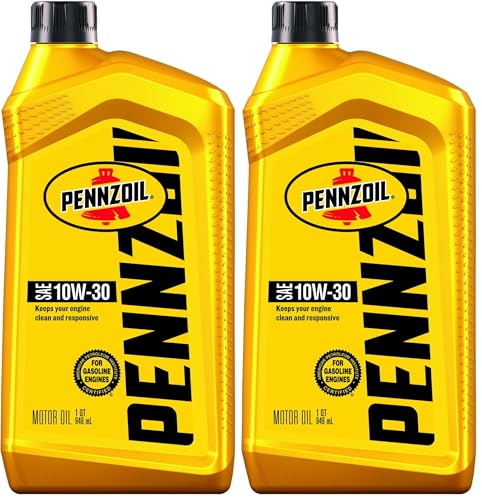
Pennzoil 10W-30 conventional motor oil is formulated to maintain engine cleanliness and responsiveness, with wear protection verified in standard engine tests. This option is packaged as a per-pack 2-quart set and is suitable for vehicles that require a reliable, conventional 10W-30 formulation. Its focus is on keeping engines free from deposits and maintaining smooth operation over typical driving cycles.
Castrol GTX 10W-40 Conventional Motor Oil, 5 Quarts

This Castrol GTX 10W-40 variant broadens protection across a wider temperature range and thickens slightly under high-temperature operation to maintain viscosity. It emphasizes protection against both viscosity and thermal breakdown while providing deposit control and anti-wear benefits, which can aid in engines that operate under heavier loads or hotter climates.
Castrol GTX 20W-50 Conventional Motor Oil, 5 Quarts

Castrol GTX 20W-50 is designed for higher viscosity protection, ideal for older engines or conditions that demand a thicker oil film. Its TriShield technology provides enhanced deposit protection, while high-temperature performance helps prevent breakdown in demanding environments. This option supports engines requiring thicker conventional oils or classic vehicles with robust tolerances.
Valvoline Daily Protection 10W-30 Conventional Motor Oil 1 Quart
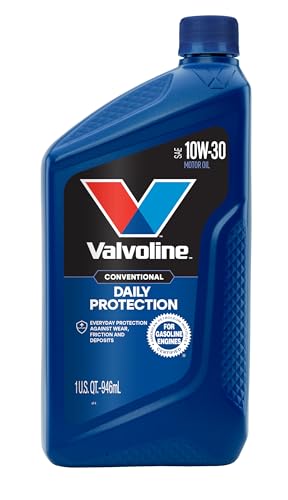
Valvoline Daily Protection 10W-30 provides everyday protection against wear, deposits, and sludge, which are common concerns for conventional formulations. It delivers reliable high-temperature protection for severe driving conditions and offers good cold-start performance, helping reduce wear during cold starts and supporting smoother operation in a variety of climates.
Buying Guide: Conventional Engine Oil Purchase Considerations
- Viscosity and climate: 5W-30 or 10W-30 are common for modern engines, with 20W-50 suited to hot climates or older engines that tolerate higher viscosities. Consider climate, driving style, and manufacturer recommendations.
- Engine mileage and condition: Higher-mileage or classic engines may benefit from slightly different formulations, such as thicker oils or additives designed for sludge control and seal protection.
- Deposits and sludge protection: If your vehicle is prone to deposits or sludge buildup, look for oils that emphasize detergents and engine cleanliness in their features.
- Anti-wear and base oils: Premium base oils and anti-wear additives improve film strength and reduce wear on pistons, bearings, and cam lobes, particularly in older engines or high-load scenarios.
- Manufacturer guidelines: Always align oil choice with your vehicle’s manual. Some engines tolerate broader ranges; others require specific viscosities for optimal performance.
- Availability and packaging: Conventional oils are widely available in quarts or liters; consider whether you need a single quart for top-offs or a multi-pack for regular maintenance.
- Environment and disposal: Choose products from brands with responsible packaging and dispose of used oil according to local regulations.
- Performance expectations: Conventional oils generally provide reliable wear protection, sludge control, and simple cold-start performance without the additives found in synthetic blends or full synthetics.
Across these options, users should evaluate climate, engine type, and maintenance habits to determine the most suitable conventional oil. Each product listed offers distinct advantages—from broad temperature protection to ease of availability—while maintaining the core function of conventional motor oils: lubrication, cleanliness, and wear reduction.