Choosing a reliable car diagnostic machine helps you quickly identify why your check engine light is on, view live sensor data, and determine the right steps to repair. The following picks cover a range of features, from basic code reading to advanced live data and comprehensive DTC libraries. Each option works with most OBDII-compliant vehicles and offers clear, actionable information for American drivers and DIY enthusiasts alike.
| Product | Brand | Key Strength |
|---|---|---|
| ANCEL AD310 Classic Enhanced Universal OBD II Scanner | ANCEL | Simple, fast code reading and clearing |
| FOXWELL NT301 OBD2 Scanner | FOXWELL | Live data, MIL control, basic fault code access |
| BlueDriver Bluetooth Pro OBDII Scan Tool | BlueDriver | Advanced diagnostics with 7000+ issues and repair reports |
| VDIAGTOOL VD10 OBD2 Scanner | VDIAGTOOL | Extensive DTC library and clear TFT screen |
| WEJOWE OBD2 Scanner Diagnostic Tool | WEJOWE | Extensive DTC library and multi-language support |
Note: The selections prioritize broad vehicle compatibility, clear code interpretation, and user-friendly interfaces. They are suitable for home diagnostics, basic repairs, and routine maintenance without professional-grade equipment.
ANCEL AD310 Classic Enhanced OBD II Scanner

The ANCEL AD310 is a best-selling OBD II scanner known for fast, reliable engine fault code reading and clearing. It supports 1996 or newer OBD2 protocol vehicles and provides emission system diagnostic codes, live data, freeze frame, I/M readiness, and vehicle information. Its compact design, 2.5-foot cable, and clearly labeled buttons support quick, on-the-go diagnostics in a shop or driveway setting. The device obtains power directly from the vehicle’s OBDII port and does not require batteries or a charger. This model emphasizes speed and ease of use, especially for drivers who want immediate feedback after repairs.
Features include quick code reading, easy code clearing, and the ability to view live data and memory data. It is praised for accuracy in identifying the cause of the check engine light and providing actionable results, which helps reduce troubleshooting time. The AD310’s robust build and portable size make it a practical tool for DIYers who frequently work on vehicles or want a dependable backup scanner for emergencies.
MOTOPOWER MP69033 OBD2 Scanner

The MOTOPOWER MP69033 is a practical multi-function OBD2 code reader designed for broad compatibility with most 1996 US-based, 2000 EU-based, and Asian cars. It features a built-in DTC lookup library, enabling quick determination of engine light causes, code erasure, and data display. Users can view freeze frame data, I/M readiness, vehicle information, data flow, real-time curves, and basic vehicle speed and load calculations. An important benefit is its power source: it runs directly from the vehicle via the OBDII port, with no separate battery or charger required.
Its 2.8″ LCD display provides clear visibility, and the device’s multilingual support (English, German, Dutch, Spanish, French, Italian) makes it accessible to a broad audience. The MP69033 is well-suited for DIYers seeking a straightforward, capable tool that covers essential diagnostic tasks without overwhelming features. The device emphasizes reliability and ease of use, particularly when identifying the root causes of check engine alerts.
FOXWELL NT301 OBD2 Scanner

The FOXWELL NT301 OBD2 scanner focuses on practical diagnostics for check engine lights. It enables reading DTCs, checking emissions readiness status, and turning off the CEL (MIL) after repairs. The device can reset monitors, read live data, and retrieve the vehicle VIN. It offers reliable results for most worldwide cars, SUVs, light trucks, and 12V diesels equipped with OBD2. This scanner is best suited for users who want quick fault-code resolution and basic live data visualization without more advanced features like bi-directional control.
One limitation is that the NT301 does not support ABS, SRS, or programming-related tasks. It emphasizes a straightforward workflow: select the correct menu, read codes, and review live data graphs to identify suspicious sensor trends. Its design prioritizes clarity and ease of use, making it a dependable tool for everyday car care and quick repair validation.
FIXD Bluetooth OBD2 Scanner

The FIXD Bluetooth OBD2 Scanner focuses on mobile diagnostics and car maintenance planning. It pairs with iPhone and Android devices to scan and identify 39,000+ issues across thousands of vehicles. The accompanying app provides explanations of codes and guidance on repairs rather than just listing raw codes. FIXD also supports maintenance reminders and the ability to share results with family, a shop, or a technician. This option is ideal for users who prefer a smartphone-based experience with actionable insights and ongoing vehicle monitoring.
Key advantages include a simple setup, unlimited scans with the app, and the ability to track multiple cars within one account. While it excels in user-friendly diagnostics and repair planning, it relies on Bluetooth connectivity and the paired app’s interpretation of codes. It is best for owners seeking a convenient, portable, and cost-effective diagnostic workflow integrated with mobile devices.
BlueDriver Bluetooth Pro OBDII Scan Tool
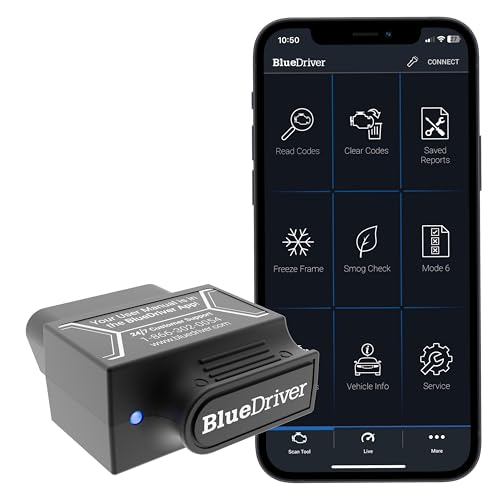
BlueDriver stands out for professional-level diagnostics with no subscription fee. This Bluetooth Pro OBDII scan tool is compatible with iPhone and Android devices and provides extensive diagnostics beyond basic codes. It can read and clear trouble codes and supports ABS, SRS, TPMS, and other systems with enhanced information. BlueDriver delivers unlimited repair reports, practical repair guidance, and real-time health monitoring via live data. This makes it a strong all-around option for serious DIYers or those who want comprehensive vehicle health insight without recurring costs.
Its architecture hinges on a robust library of codes and repair reasoning, making it a preferred choice for those who want detailed context behind each fault. The user experience emphasizes clear defect explanations and recommended fixes, helping users decide proper next steps. While it leverages a Bluetooth connection, its mobile app interface and data presentation are designed for quick comprehension on the go.
VDIAGTOOL VD10 OBD2 Scanner
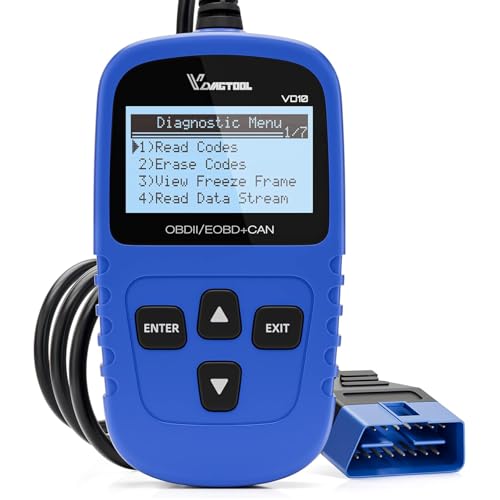
VDIAGTOOL VD10 is designed as a user-friendly tool for DIYers with a strong emphasis on a fast fault code read and clear DTC definitions. It supports all OBDII protocol cars and presents diagnostic information on a TFT screen with a built-in DTC lookup library, offering more than 3,000 codes. This model stresses ease of use, showing definitions directly on the device and supporting quick diagnosis for a wide range of vehicles. It also offers live data, I/M readiness, and vehicle information retrieval, making it a practical first-step tool for budget-conscious buyers who still want meaningful diagnostic insight.
Its compatibility with multiple languages and the straightforward read/clear workflow make it suitable for users who want immediate results without needing cloud services or subscriptions. The VD10 balances cost with useful features, appealing to home mechanics seeking a reliable, standalone device for routine diagnostics and basic system checks.
ANCEL AD410 Enhanced OBD2 Scanner

The ANCEL AD410 Enhanced OBD2 Scanner provides wide compatibility, supporting all 16PIN vehicles with OBDII, including various protocols and newer CAN vehicles. It offers quick read and clear fault codes, advanced diagnostics like O2 sensor testing and EVAP leakage checks, and monitor readiness for smog tests. Although powerful, it is important to note that the AD410 is primarily an engine-focused reader and does not support other systems such as ABS or SRS. This makes it a strong choice for drivers who want a robust engine diagnostic tool with enhanced OBDII capabilities without extra cross-system features.
With multilingual support and no battery requirement, the AD410 emphasizes practical, on-vehicle diagnostics, enabling pre-purchase checks, maintenance planning, and quick verification after repairs. Its emphasis on O2 sensor and EVAP testing provides a broader view of engine performance and emissions-related issues, helping users optimize fuel efficiency and emissions.
WEJOWE OBD2 Scanner Diagnostic Tool

The WEJOWE OBD2 Scanner is a comprehensive diagnostic tool designed to work with all OBDII cars manufactured after 1996. It features a large built-in DTC library (over 35,901 codes) and supports ten languages, which broadens its usability for diverse owners and regions. It offers read and clear codes, I/M readiness, live data, VIN retrieval, battery voltage testing, and onboard monitoring. The device is positioned as a professional-grade option suitable for replacement or upgrade from older readers, providing extensive definitions and practical guidance. It is a strong balance between depth of information and user accessibility for ongoing car health management.
WEJOWE emphasizes broad vehicle compatibility and a robust data library, enabling users to diagnose issues accurately without frequent web searches. While it offers extensive features, users should consider the learning curve associated with its vast DTC database. Nonetheless, for enthusiasts who want a deep, self-contained diagnostic experience, the WEJOWE scanner stands out as a versatile instrument for regular maintenance and troubleshooting.
Buying Guide: Key Purchase Considerations
- Vehicle compatibility: Ensure the scanner supports your vehicle year, make, and model. Some models list broad 1996+ compatibility, while others are optimized for newer CAN networks.
- DTC library and definitions: A larger built-in library reduces the need for online lookups. Some tools offer tens of thousands of codes with definitions and repair guidance.
- Live data and graphs: Real-time sensor data helps identify intermittent issues and track performance trends. Look for clear graphs and intuitive displays.
- Ease of use vs. depth: Basic readers are quick and simple; professional-grade tools provide deeper diagnostics but may require more learning.
- Power and battery: Many devices draw power from the vehicle; some rely on battery-powered modules. Consider battery-free options for convenience.
- Language and interface: Multi-language support is helpful for households or shops with diverse users.
- Connectivity: Bluetooth or USB connections affect setup and compatibility with mobile apps. Consider where you’ll use the tool most often.
- App ecosystem (for Bluetooth tools): A supportive app with clear explanations, repair guidance, and shareable reports adds value beyond raw codes.
- Size, durability, and ergonomics: A compact, well-built device with a clear display and sturdy connectors is practical for shop or driveway use.
- Cost vs. benefit: For basic checks, a simple reader may suffice. For ongoing maintenance or frequent repairs, a more capable tool with extensive data may justify the investment.
Usage Scenarios and Perspectives
- Beginner DIYers: Favor straightforward readers that read and clear codes with helpful descriptions and app support for repairs.
- Regular enthusiasts: A tool with live data, DTC lookup, and broad vehicle coverage helps diagnose symptoms before visiting a shop.
- Budget-conscious buyers: A compact, battery-free model with essential features provides value without complexity.
- Professional households: Consider tools with comprehensive DTC libraries, multi-language options, and robust diagnostics for diverse fleets.