Choosing a reliable car diagnostic computer helps you quickly identify why a check engine light is on, read live sensor data, and decide when a visit to the shop is needed. The following selections cover a range of needs—from compact, pocketable readers to feature-rich scanners that support multiple systems such as ABS, SRS, and transmission. Each option plugs directly into the OBDII port, draws power from the vehicle, and provides fault code definitions to help you understand engine health without expensive diagnostics.
The table below highlights five versatile options chosen for broad vehicle compatibility, built-in DTC libraries, live data capabilities, and user-friendly interfaces. This summary can guide you toward a model that matches your DIY goals, whether you’re a casual vehicle owner or a budding mechanic.
| Product | Brand | Key Strength |
|---|---|---|
| ANCEL AD310 | ANCEL | Fast code reading/clearing; compact, sturdy design |
| WEJOWE OBD2 Scanner | WEJOWE | Extensive DTC library; broad vehicle compatibility |
| FOXWELL NT604 Elite | FOXWELL | 5-in-1 diagnostics: ABS/SRS/transmission + OBDII |
| MOTOPOWER MP69033 | MOTOPOWER | Clear code, live data, wide protocol support |
| BlueDriver Bluetooth Pro | BlueDriver | Mobile app with repair reports and real-time health checks |
ANCEL AD310: Compact, Reliable OBD II Scanner

The ANCEL AD310 is a popular, budget-conscious option known for speed and simplicity. It supports all 1996 and newer OBDII protocols and is widely recommended by auto enthusiasts. The device reads and clears diagnostic trouble codes related to emissions, presents live data, freeze-frame information, and I/M readiness status. It plugs directly into the OBDII port with no batteries or external power required, drawing power from the vehicle. A robust, 2.5-foot cable and a compact housing make it practical for on‑the‑go use, even in tight engine bays. The AD310’s interface and clearly labeled buttons help users quickly identify the root causes of a check engine light.
Features emphasize user-friendly operation and speed: quick code retrieval, clear code definitions, and straightforward clearing of fault codes after repairs. While it covers essential functions, it does not replace a full professional diagnostic tool for complex repairs, but it remains a strong choice for homeowners and hobbyists who want reliable, fast feedback without a high price tag.
WEJOWE OBD2 Scanner: Deep Diagnostic Library

The WEJOWE OBD2 scanner is designed to support a wide array of vehicles post‑1996 and features a substantial DTC library of tens of thousands of codes. This depth helps quickly pinpoint issues and reduce guesswork when codes appear. It supports reading and clearing codes, viewing live data streams, retrieving the VIN, and monitoring I/M readiness. The tool emphasizes compatibility across US, EU, and Asian market vehicles and supports multiple languages, which is helpful for international users or households with diverse vehicles. It’s a practical choice for those who want robust diagnostic capabilities without moving into high-end professional options.
In practice, users gain rapid insight into why the check engine light is on and can assess whether repairs are likely to resolve the issue. The WEJOWE scanner is especially appealing for people managing several vehicles or for those who value quick, definitive fault code definitions without additional internet lookups.
FOXWELL NT604 Elite: 5‑in‑1 Diagnostic Power

The FOXWELL NT604 Elite expands the traditional OBD2 offering with 5-in-1 diagnostics: OBDII, ABS, SRS (airbag), transmission, and engine. This makes it a versatile tool for owners who want a more complete snapshot of vehicle health without owning multiple devices. The unit ships with up-to-date software, ready to use out of the box, and provides live data streaming, DTC lookup, data playback, and the ability to print results. It is designed for reliability and ease of use, suitable for car owners who anticipate recurring diagnostics or minor troubleshooting tasks. Note that while powerful, it is a diagnostic tool rather than a repair tool, and users should complete any required fixes before clearing fault codes.
NT604 Elite emphasizes affordability and capability, offering a robust feature set for common maintenance checks and DIY repairs. If your vehicle requires ABS or SRS insight along with engine data, this model provides a central device to cover those needs without branching into multiple tools.
MOTOPOWER MP69033: Clear Codes, Live Data, Broad Protocols

The MOTOPOWER MP69033 concentrates on practical functionality with a built-in DTC lookup library and support for 9 protocols, covering most vehicles manufactured since 1996. It provides essential features such as reading and erasing codes, viewing freeze-frame data, I/M readiness, and real-time data streams. The device uses a 2.8″ LCD with a backlit display, and it draws power directly from the OBDII port, requiring no separate battery or charger. Designed for user-friendliness, this scanner is well-suited for do-it-yourselfers who want clear data and dependable performance without added complexity.
With broad compatibility and multilingual support, the MP69033 works well for households with vehicles from various regions. Its display and data readouts are straightforward, making it a reliable daily tool for monitoring engine health and ensuring maintenance tasks are completed on time.
BlueDriver Bluetooth Pro: Mobile Diagnostics Power
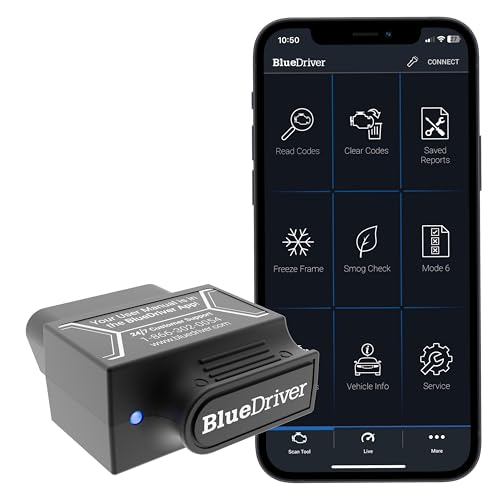
The BlueDriver Bluetooth Pro offers a mobile-first approach with a robust app ecosystem. No subscription is required for core diagnostics, including reading and clearing codes related to the check engine light, ABS, SRS, and other systems. The BlueDriver platform provides repair reports and suggested fixes, along with real-time data monitoring as you drive. This makes it particularly appealing to iPhone and Android users who prefer a connected, app-driven experience. The device pairs via Bluetooth, enabling wireless diagnostics across vehicles within the supported range and keeping your workflow flexible and portable.
BlueDriver emphasizes depth of analysis and ongoing support through its repair reports, giving users a practical path from code interpretation to potential solution. It is an excellent option for those who value mobility, frequent use in different locations, and access to structured repair insights in addition to standard diagnostic data.
Buying Guide: Key Purchase Considerations
- Vehicle compatibility: Confirm that the scanner supports your vehicle year range and regions (US/EU/Asia). Some models are broad but may have limitations with certain hybrids or newer CAN protocols.
- System coverage: Decide whether you need OBDII only or multi-system diagnostics (ABS, SRS, transmission). Multi-system tools reduce the need for multiple devices.
- Code library size: A larger built-in DTC database speeds up fault identification. This is especially helpful for less common codes or older vehicles.
- Live data and freeze frame: Real-time sensor data helps you diagnose root causes more accurately. Freeze-frame data can be critical for reproducing conditions.
- Data presentation: Look for clear, easy-to-read screens or app interfaces, with simple navigation and intuitive fault-code definitions.
- Power source: Most devices draw power from the vehicle; some portable tools rely on internal batteries. Ensure compatibility with your preferred workflow and portability needs.
- Language support: Multilingual interfaces benefit users in diverse households or repair shops with international clients.
- Usage context: If you plan to use the scanner at home, look for features like VIN retrieval and I/M readiness to prepare for smog inspections. If you need mobility, Bluetooth-enabled tools with companion apps may be ideal.
- Budget and upgrade path: Entry-level tools meet basic needs, while higher-end devices offer broader system coverage and professional-grade diagnostics. Consider whether you might want to upgrade in the future.
Overall, choosing a car diagnostic computer involves balancing breadth of coverage, ease of use, and the level of detail you require. For most DIYers, a device with solid OBDII functions plus some extended capabilities (like ABS/SRS or live data) provides the best value. For frequent testers or multi-vehicle households, a tool with a large DTC library and mobile app support can deliver additional long-term benefits through ongoing updates and repair guidance.