Blind spot detection systems help drivers monitor nearby lanes, warn of approaching vehicles, and support safer lane changes. This article reviews five popular options and explains what to consider when choosing one for your car. Each product section includes a quick glance at key features to help you compare at a glance.
| Product | Brand | Key Benefit |
|---|---|---|
| EASYGUARD EBS001 Blind Spot System | EASYGUARD | Lane change assistance with audible alerts |
| BlueDex Universal Blind Spot Monitor | BlueDex | Two-sensor 24GHz millimeter wave detection |
| LivTee Blind Spot Mirrors (2-Pack) | LivTee | 360° wide-angle convex mirrors for expanded visibility |
| TOTMOX Ultrasonic Blind Spot Kit | TOTMOX | Ultrasonic detection with adjustable range |
| Pyle Ultrasonic Blind Spot Detection System | Pyle | Dual sensors with LED and buzzer for lane changes |
EASYGUARD EBS001 Blind Spot Monitor System

The EASYGUARD EBS001 is a lane-change assist system designed to alert drivers when objects enter the blind area. It uses LED indicators to signal approaching traffic and provides warning behavior that escalates as objects approach. The system monitors the neighbor lane within a range of 6-12 meters and detects objects moving at a speed gap over 0.5 m/second, helping drivers anticipate lane changes with greater confidence. A rapid LED flash and a three-beep sequence can occur during lane-change maneuvers when the steering is engaged.
Key considerations include ease of installation, compatibility with DC12V vehicles, and how warnings align with your driving style. If you frequently change lanes on highways or in heavy traffic, this system offers a helpful auditory and visual cue to reduce blind-spot risks. As with all after-market sensors, sensor placement and calibration impact performance, so follow the installation instructions closely to maximize reliability.
BlueDex Universal Blind Spot Monitoring Assistant

The BlueDex system centers on two 24GHz millimeter wave sensors to detect vehicles in blind spots, including low-visibility conditions such as night, rain, or snow. It offers an LED indicator scheme that responds based on turn signals: steady LED when signals are off, flashing LED and buzzer when signaling, and double-flash modes for additional awareness. Detection spans from 1 to 32.8 feet (approximately 0.3–10 meters), making it suitable for a variety of mid-size and larger vehicles. The setup emphasizes alert reliability during maneuvers and adjusts to ambient driving dynamics.
Consider whether your vehicle supports the sensor mounting locations and whether you prefer a two-sensor millimeter-wave approach for continuous lane-change awareness. This model provides a balance between proactive warnings and simple installation, appealing to drivers who prioritize clear feedback during lane changes in diverse weather conditions.
LivTee Blind Spot Mirror 2-Pack
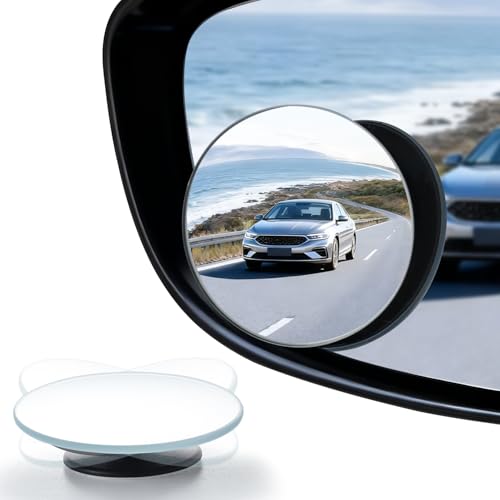
The LivTee Blind Spot Mirrors are 2-inch round HD glass convex mirrors designed to attach to existing side mirrors for a broader field of view. The 360-degree rotate and sway-adjustable design enables quick positioning to minimize blind spots across cars, SUVs, vans, and trucks. The frameless, slim profile minimizes visual obstruction while maintaining a modern look. Installation typically involves simple mounting brackets, making them a popular option for drivers who want immediate, passive improvements to visibility.
While these mirrors don’t offer active vehicle alerts, they effectively extend your peripheral view, complementing electronic blind-spot systems. For drivers who want a low-tech, maintenance-free enhancement or a temporary solution for shared vehicles, these mirrors provide a tangible, immediate improvement to situational awareness.
Pyle Ultrasonic Blind Spot Detection System

The Pyle Ultrasonic Blind Spot Detection System includes two ultrasonic sensors, LED indicators, buzzers, and a wiring harness designed to notify you during lane changes. It supports a 0–5 meter detection length, and its dual-sensor approach helps monitor adjacent lanes for approaching vehicles. The kit positions the sensors to provide awareness in the blind zones where the next lane may intersect with your vehicle trajectory. This arrangement supports safer lane changes and can integrate with existing electrical systems in many cars.
Consider whether you need a longer detection range, how the LED and buzzer notifications align with your driving environment, and whether you prefer a complete kit with wiring harnesses and mounting hardware. The system is well-suited for drivers seeking a balance between clear alerts and straightforward installation without premium features that may exceed practical needs.
Buying Guide: Key Factors In Blind Spot Monitoring
Choosing the right blind spot monitoring solution involves balancing sensitivity, installation practicality, and how you want alerts delivered. Here are essential considerations from multiple perspectives:
- Detection method: Ultrasonic sensors versus millimeter-wave radar or camera-based systems. Ultrasonic sensors are generally affordable and effective at short to mid-range distances, while millimeter-wave sensors excel in adverse weather and longer ranges.
- Range and coverage: Consider your typical driving environment—city streets, highways, or rural roads. A system with adjustable detection distance helps tailor sensitivity to your vehicle size and maneuvering style.
- Alerts: LEDs, audible buzzers, or a combination. Ensure alerts are noticeable but not distracting. Turn-signaling integration can enhance effectiveness by signaling intent.
- Installation: After-market kits vary in complexity. Some require professional installation, while others are DIY-friendly with clear mounting locations for sensors or mirrors.
- Power and compatibility: Verify voltage requirements (commonly 12V) and compatibility with your vehicle’s electrical system. Some units offer easier wiring harness integration.
- Maintenance and durability: Weather resistance, sensor protection, and the potential impact of road debris on sensor accuracy are important for long-term reliability.
- Cost vs. value: Compare upfront cost with system capabilities and expected lifespan. Consider whether you prefer active alert systems or passive visual aids like convex mirrors for immediate improvements.
- Vehicle type and mounting options: SUVs, trucks, or compact cars may benefit from different sensor placements. Assess whether you need dual-sensor coverage or mirrors that expand your field of view.
Comparison At A Glance
- Active alert systems (LEDs/buzzers) with varying detection ranges and mounting requirements offer proactive lane-change warnings.
- Two-sensor, 24GHz millimeter-wave solutions tend to perform well in poor visibility and provide multi-directional awareness.
- Convex mirrors provide a simple, passive enhancement to visibility, ideal for quick improvements and low maintenance.
- Ultrasonic-based kits balance cost and performance, delivering solid lane-change alerts with straightforward installation.
When selecting, align the system features with your driving style, vehicle type, and how you prefer to receive information while on the road. This ensures consistent safety benefits without unnecessary complexity or cost.