Upgrade your bicycle with a compact, powerful 2-stroke engine kit designed to extend range, boost speed, and transform everyday rides into practical mini-motorcycles. This article highlights five popular kits for 26″ to 28″ bikes, summarizing their capabilities and installation notes. Read on to compare power output, fuel economy, and ease of setup to find the best match for your needs and local regulations.
| Product | Displacement | Approximate Top Benefit |
|---|---|---|
| IMAYCC 100cc Bicycle Engine Kit (100CC Silver) | 100cc | Higher power for longer rides |
| JAYGOVAN 80cc Bicycle Engine Kit | 80cc | Good balance of power and economy |
| IMAYCC Bike Motor Kit 100cc | 100cc | Strong performance with CDI ignition |
| Arligaaduo 80cc 2-Stroke | 80cc | Durable build and economical operation |
| JAYGOVAN 110cc Bicycle Engine Kit | 110cc | Peak power and higher top speeds |
These kits share common features: they convert standard bicycles into motorized bikes, use a single-cylinder air-cooled 2-stroke engine, and rely on CDI ignition with foot-pedal starts. While installation generally requires basic mechanical skills and a few hours, performance and reliability depend on the kit’s displacement, gearing, and the quality of your bike frame. This guide focuses on five widely available options, their standout benefits, and what to expect during setup and use.
IMAYCC 100cc Bicycle Engine Kit — 100cc Silver

The IMAYCC 100cc kit offers a robust power profile with 2 kW at 6,500 rpm. It includes a 44-tooth drive sprocket, 110 knots chain, and a 36-spoke wheel assembly for added strength. Installation guidance emphasizes a 2–4 hour setup and recommends checking online tutorials for best results. This kit is positioned for riders seeking longer-range capability and quicker acceleration without sacrificing reliability during extended outings.
JAYGOVAN 80cc Bicycle Engine Kit — 80cc

This 80cc kit emphasizes a balance of power and fuel efficiency, delivering about 2.58 horsepower and a peak around 5,000 RPM. A CDI electronic ignition allows quick starts, and the manual clutch helps maintain precise speed control. Real-world top speeds near the mid-20s mph range make it suitable for casual commuting and weekend rides, with riders prioritizing economical operation and straightforward maintenance.
IMAYCC Bike Motor Kit 100cc — 100CC Silver

Another 100cc IMAYCC option emphasizes a complete engine kit with 2-stroke single-cylinder power. It uses foot pedal starting, CDI ignition, and includes similar drive components as the 100cc model above. Installation notes stress the importance of preparation and YouTube tutorials to minimize common hurdles. The kit targets riders seeking dependable power and smoother acceleration for daily errands or longer rides.
Arligaaduo 80cc 2-Stroke Bicycle Kit — 80cc

This 80cc kit highlights a rugged build with aluminum and iron components designed to resist impact and corrosion. It delivers around 2.1 kW and up to 5,000 RPM, offering a top speed in the low 20s mph range with a half-gallon-plus fuel capacity. It is pitched as economical and practical for riders who value durability and straightforward maintenance alongside everyday use.
IMAYCC 80cc Bicycle Engine Kit — 80cc Black

This 80cc IMAYCC kit mirrors the 80cc variant’s DIY-friendly approach, with similar installation timelines and a 2.1 kW output at 5,000 rpm. It uses CDI ignition and pedal start, and features a 44-tooth sprocket alongside a 110-knots chain and 36 spokes. The emphasis is on reliable performance and ease of installation for riders seeking a balance between weight, power, and cost.
IMAYCC Bike Motor Kit 80cc — 80cc Silver
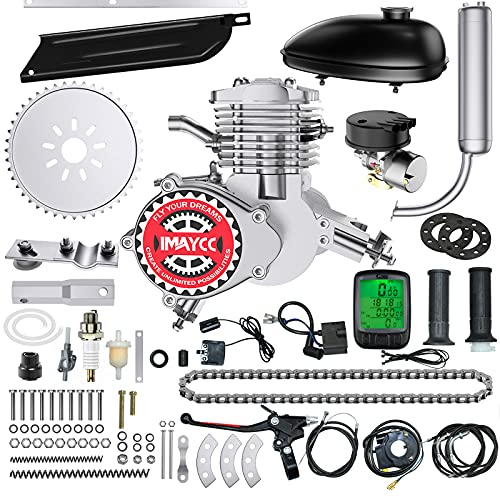
This 80cc kit combines a complete engine with digital wiring and CDI ignition. It specifies a 2.1 kW output at 5,000 rpm and a foot pedal starting method, making it approachable for DIY enthusiasts upgrading a 26″ to 28″ bike. The drivetrain includes a 44-tooth sprocket, 110 chain links, and 36 spokes, aiming for durable on-road performance and consistent acceleration.
Buying Guide: Key Considerations And Comparisons
When choosing a 2-stroke bicycle engine kit, consider displacement, power, and overall ride quality. Larger displacements (100cc or more) generally deliver stronger acceleration and extended range but may require more careful installation and heavier frames. Kits around 80cc offer a more economical option with respectable top speeds for city commuting and casual recreational riding.
- Installation difficulty: Most kits require basic tools and mechanical aptitude. Look for DIY-friendly instructions, recommended tutorials, and community support to navigate common issues.
- Engine type and ignition: CDI ignition is common and simplifies starting, while foot-pedal starting remains a familiar method for many riders.
- Drive train compatibility: Confirm sprocket sizes (typically 44 teeth) and chain lengths (often 110 links) to ensure proper alignment with your bike’s gearing and wheel setup.
- Durability and materials: Aluminum and iron components contribute to longevity, but weight and corrosion resistance can affect handling and maintenance needs.
- Fuel economy and range: Two-stroke engines are generally economical but differ by displacement, compression, and carburetion. Expect modest fuel economy variations based on riding style and terrain.
- Legal and safety considerations: Some jurisdictions regulate motorized bicycles, including licensing, insurance, and speed limits. Always verify local rules before riding on public roads.
- Maintenance and parts availability: Assess the availability of replacement parts, spares, and service support for your chosen kit to minimize downtime.
Overall, these kits provide a spectrum of power, ease of installation, and durability. Your best choice depends on whether you prioritize maximum speed for longer commutes, price-conscious upgrades, or a balance of both. Always follow installation instructions closely, perform a thorough safety check after installation, and ride within local regulations.